
 There is no doubt that maintaining the correct hygiene in our pets has a direct impact on their health and the health of the people living with them. I often hear in our clinic statements like «my dog smells doggy” or «my dog has bad breath». Many people are satisfied with the theory that dogs have to be like that to be natural… not so! 90% of dogs with these odours probably have full anal glands or have dental plaque.
Many dogs have been bathed infrequently (because the owner was told washing is bad for the skin or coat), perhaps the ears have never been
cleaned. Some owners may not worry about such problems, but it has been demonstrated that dogs with bad hygiene are more likely to have external parasites and can suffer from numerous diseases. Keeping a dog healthy is very much the job of the owner. While it is necessary to
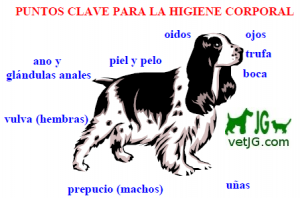
take your dog for regular checkups at the veterinarian, you also need to take care of the simple things at home so your dog will not end up with more serious problems. Follow this 10 point regime to keep your dog in perfect condition.
1-BATH: With warm water every 15 days, using special shampoos for dogs (anti-parasite shampoos are recommended). But, if your dog gets
dirty wash as and when necessary! In the summer you can cool them off daily with water, no shampoo necessary.
2-GROOMING: Brush daily using a brush best suited for your dog’s hair type. Brushing stimulates the skin and keeps it healthy. It prevents matting of your dog’s coat and removes excess hair. Long and thick hair needs brushes with bristles far apart, while short hair needs to be groomed with short and hard bristles. Wire brushes and slicker brushes remove dead skin along with excess hair, and are suitable for medium to long hair. Bristle brushes work on all coat types. Rakes remove severe tangles. Rubber curry combs massage your dog’s skin along with removing dead hair.
3-EARS: You should check for any unusual odours, redness, or inflammation weekly. Should your dog have any of these symptoms, contact your vet and set up an appointment. To clean use an animal approved ear solution which will dissolve the cerumen that accumulates in the outer ear? Be careful to not clean too deeply into your dog’s ear canal.
4-EYES: Use special wipes daily, using them on the eyelids will keep them in optimal condition, also a special eye cleansing solution can be applied monthly. Always keep eyes free of hair by combing frequently or by tying the hair back with a ribbon. Continuous irritation by the hair can commonly cause keratitis and conjunctivitis.
5-MOUTH: Brush your pet’s teeth weekly, especially if fed soft foods, thus avoiding a scale deposit, which when present, has to be cleaned by ultrasound. More convenient than the brush is the frequent use of anti-tartar tablets. Do not ignore the build up of tartar , as it may cause serious gum disease and mouth infections. It can also cause a related problem with the heart (endocarditis). Brush and wash the hair surrounding the mouth regularly so that it is not always wet with saliva, which can be a source of unpleasant odours.
6-CLAWS: Trim nails monthly, if left unattended deformations of the fingers could result. Dogs are typically averse to having their paws
handled so they do not appreciate their nails being cut. When trimming you need to be extremely careful, this is because if you cut the nails even slightly shorter than required it will be painful for your pet. Ask your veterinarian to show you how.
7-PADS: If your dog walks a lot on asphalt or in the country, you may need to use a liquid protector for their pads which helps prevent ulcer formation.
8-ANAL GLANDS: Should be checked monthly. Ask your vet to teach you.
9-ANUS: Always keep free of hair and use special wipes to keep clean.
10–GENITAL AREAS: Keep the area clean with special wipes. If, despite the above, your dog is still smelly the chances are he/she has poor nutrition of the skin, in which case a visit to the vet would be advisable. He may suggest a slight diet change or an anti-seborrhoeic shampoo/moisturizer combination. The use of deodorants, colognes and cosmetics should not be abused, as it can alter the colour and lustre of the coat. Rather than mask any smells, you are better advised to prevent them by keeping your pet clean.
This article was published in Costa Blanca News.