
Caring for the senior dog

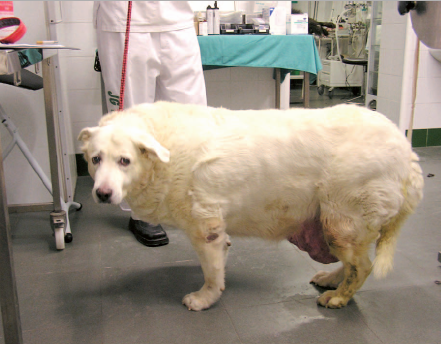
Even though your dog may be slowing down a little, there’s no reason why the later years in life shouldn’t be some of the most rewarding. After all, he’s wiser as well as older. With regular veterinary attention,  daily care and proper nutrition, your senior dog can still experience a very happy, healthy life. Dogs are often older than  we think they are, especially when we’ve had them as puppies as time flies by and we have always been used to their energetic behaviour.

There is a wide breed variation in what constitutes older age as generally speaking, small dogs live the longest, while large and giant breeds have relatively short lifespans (a Great Dane is considered ‘old’ at six). In addition  to a dog’s breed, specific lifestyle factors affect how long a particular dog will live, such as diet, exercise and medical history. As the owner of an older dog it is important to recognise tell-tale signs of illness so you can seek prompt veterinary attention. Many diseases  have slow, progressive signs that are easy to put down to ‘old age’ but in fact may be very treatable. Certain changes will occur in your dog’s body as he gets older. Important bodily functions, normally taken for granted, may start to slow down or malfunction. Just like humans, the senses eventually start to deteriorate, leading to impaired vision, hearing, taste and smell. Older dogs are also prone to a number of medical conditions, the signs of which can be subtle and that we, as owners, should be on the lookout for as many are treatable.

In the same way human medicine has lengthened life expectancy, this is also ensured in veterinary medicine. Today’s available diagnostics and treatments have enabled us to prolong the life of your pet as much as possible whilst maintaining their quality of life. Diseases that are frequently diagnosed in this age group of dogs include:
■ Osteoarthritis is common in older dogs causing reduced energy levels, lameness, stiffness or difficulty getting up, or lameness/stiffness after a walk and reluctance to exercise.
■ Dental diseases – tooth and gum conditions are common in older dogs; look out for food being dropped, excessive salivation, pawing at the mouth, smelly breath or difficulty chewing food. Swellings below the eye may be signs of tooth root abscesses and need veterinary attention. .
■ Kidney problems can cause excessive thirst and frequent  or uncontrolled urination. Drinking and urinating more can also indicate other problems such as diabetes and various other hormonal conditions.
■ Heart and respiratory conditions can cause reluctance to exercise, coughing, trouble breathing and lethargy.
■ Cancers, the type of  which will dictate the signs but any unexplained weight loss, or growths, warts or skin lumps should be investigated.
■ Cognitive behavioural dysfunction, a syndrome which can cause signs consistent with senility including disorientation, pacing and inappropriate vocalisation.
■ Cataracts can be a problem in older dogs, but a hazy, bluish appearance to the eyes can be normal (a condition called nuclear sclerosis). Your vet will be able to distinguish between the two. If you notice any of the above signs, or any other signs  of illness such as vomiting, diarrhoea, loss of appetite, weight loss or weight gain or reluctance to exercise contact your vet.

The recommendations we can offer owners of older dogs are described in our following senior plan:

1 – Nutrition: feed older pets with foods low in salt and fat (light complete foods) that are especially formulated for them. Supplement their diet with a Chondroitin Sulfate compound to reduce the symptoms of osteoarthritis as much as possible.

2 – Periodic check-ups: a clinical review conducted annually is recommended. This consists of blood tests, two Xrays, Ultrasound and an Electrocardiogram for a detailed study of how the Circulatory, Digestive, Respiratory, Endocrine, Renal, Reproductive, and  Locomotion systems are functioning. These check-ups are cheap, fast and provide essential information that enables us to control our senior patient.

3 – Hygiene: give special care and attention to the health of eyes, ears, anal glands etc with emphasis to the mouth, which should not have bad breath, gingivitis or periodontitis present. These oral infections, once present, can shorten the lifespan of your pet considerably due to their effect on the heart.

4 – Medications: we recommend the use of products such as Karsivan for all our senior patients, these enable more oxygen to reach the vital organs such as the brain, liver and kidneys. In addition to Heart failure, Periodontitis, Arthritis, Nephrotic Syndrome and many others diseases it is now more common to find tumours or cancer in our senior patients.

Over the years, the chances of our dogs having a tumour have increased. The types of tumours
vary from the less harmful such as warts to the most damaging Lymphomas. In bitches, mammary tumours refer directly to their reproductive life and can affect 50% of all bitches over the age of 7.
The veterinary expert knows how to look for any evidence of tumours in senior patients and in addition we have now at our disposal series of diagnostic tools that will facilitate their early detection.

This article was published in Costa Blanca News.

The myths and facts about toxoplasmosis

Toxoplasmosis is caused by a microscopic parasite called Toxoplasma gondii. Cats and other feline species are the definitive hosts, ie. the parasite develops in the cat. However, the infection can develop in several animal species including man.

Toxoplasmosis is an illness that is arousing a growing amount of interest in society. Many  clients who come to our hospital are worried about the possible transmission of this disease.

Toxoplasmosis is defined as a zoonosis, this means it is a disease shared by animals and  humans and can be transmitted from animals to humans. With this article I will try to break some of the myths created about this disease and provide prevention measures  and hygiene tips to minimize the possibility of transmitting the disease to humans.

Toxoplasmosis is caused by a microscopic parasite called Toxoplasma gondii. Cats and   other feline species are the definitive hosts, ie. the parasite develops in the cat. However, the infection can develop in several animal species including man.

In humans, most infections are asymptomatic, causing no disease. Maybe one in 10  people will demonstrate mild flu-like symptoms. These can go totally unnoticed if no  specific clinical examinations are performed. People when infected, develop immunity,  therefore re-infection does not occur. Animals are infected by eating infected meat, by ingestion of faeces of a cat that has itself recently been infected or by transmission from  mother to fetus. Although cats are often blamed for spreading toxoplasmosis, contact with  raw meat is a more significant source of human infections in many countries and  fecal contamination of hands is a greater risk factor. According to some studies, around  half the world’s population has been infected with toxoplasma at some point in their lives.

Cats excrete the pathogen in their faeces for a number of weeks after contracting the  disease, generally by eating an infected rodent. Even then, cat faeces are not generally  contagious for the first day or two after excretion, after which the cyst ‘ripens’ and  becomes potentially pathogenic.

Studies have shown that only about 2% of cats are shedding oocysts at any one time and  that oocyst shedding does not recur even after repeated exposure to the parasite. The  greatest risks are to people with a weakened immune system, such as AIDS patients or  pregnant women.

In pregnant women the parasite can cross the placenta and infect the fetus, causing abortions or congenital malformations that may develop even several years after birth. If the woman is infected before six months of pregnancy there are no risks to the mother or the fetus due to the development of antibodies. A simple blood test can determine whether the mother has been exposed to the parasite and whether the infection has  occurred recently. In the latter case, your doctor will provide a drug that will greatly reduce the risk of infection to the fetus. If you are pregnant or plan to become pregnant, check with your doctor. In AIDS patients or people receiving treatment with certain drugs such as steroids or chemotherapy the infection can progress to a severe form of the  disease.

Recommendations and appropriate measures to prevent toxoplasma infection: These recommendations are valid for the general population, for pregnant women or immune  compromised patients in particular. Wear gloves when handling raw meats. Wash hands  and instruments with soap and water after handling meat products. The freezing process  of 3-5 days or cooking meats and vegetables over the 66 ° C completely destroyed the  parasites.

  • Wash fresh produce before consumption.
  • Boil water if canalisation system is non existent.
  • Use gloves when gardening or working with soil. In the soil the parasites can remain infectious for many months.
  • Do not feed cats raw meat.
  • It is advisable to rinse out the cat litter box, especially if they are roaming free. If you are pregnant or immune compromised, delegate the job to another person.

In conclusion, it is important to note that from the epidemic or statistical point of view the vast majority of human infections are not associated to cats. Therefore living with your pets does not significantly increase the risk of infection. Especially not when your pet is housekept and fed only on commercial feed or thoroughly cooked homemade food. Without doubt, the greatest risk of infection in developed countries is the handling of raw  meat, ingestion of poorly cooked meats and vegetables and the lack of appropriate  hygiene measures when handling soil or doing yard work.

This article was published in Costa Blanca News.

How often should we deworm our pets?

Up to 30% of our animals are carriers of various parasites, including several types of worms round (nematodes) and flatworms (tapeworms), most of them transmitable to humans

According to various studies and depending on the area you live in (city or rural area), up  to 30% of our animals are carriers of various parasites, including several types of worms  round (nematodes) and flatworms (tapeworms), most of them transmitable to humans.

Deworming should be performed both in puppies and adult animals as well as pregnant bitches/cats (as they can often transmit these parasites to their offspring).

It is therefore important to check our animals and set up a regular routine of at least four times a year. Just a simple protocol and some hy-gienic measures to prevent transmission: Apart from collecting pet droppings and disposing of them appropriately it is essential to prevent the reproduction of these parasites by avoiding the feeding of raw meat. Try and restrict contact with wild animals (rodents and insects such as flies, cockroaches, etc.) and access to fields or gardens where children play.

Recent European guidelines use a philosophy more geared towards individual risks for each animal. These guidelines recommend that if regular deworming is used, animals should be treated at least four times a year, with no more than three months between
each treatment. This is based on some research indicating that dropping treatment to three-four times per year had no effect on parasite levels. This approach is more  conservative (in terms of the number of treatments) and probably has less of an impact on the development of resistance, but it requires more organisation and thought. If used properly, it’s probably a good approach.

Heartworm Photo from JG vets

There really can’t be a ‘one program fits all’ approach that properly addresses the risks for all pets (and people) in all regions. Tailoring the deworming strategy to your pet, based on your pet’s and your family’s risk, is the logical approach.

Regardless of the chosen approach, regular fecal testing is a good (and underused) way to assess what’s going on with parasites in your pet, and to identify treatment failure or the emergence of drug resistance.

Monthly heartworm prevention has an impact on what you do as well, since typical  heartworm preventives are also effective against roundworms and hookworms, the main  parasites targeted by routine deworming. If you are in a region where heartworm is  present, monthly treatment during the heartworm season is indicated, and the main  decision that needs to be made is what to do the rest of the year (where heartworm isn’t a  risk year-round).

This article was published in Costa Blanca News.

MRI: a powerful diagnostic weapon for our pets

MRI is a modern diagnostic tool which was first used in human medicine in the 80s.

What is an MRI scanner?

It is a modern diagnostic tool which was first used in human medicine in the 80s. It obtains anatomical images of any part of the animal in any plain (Sagittal, Coronal and Transverse), thus detecting any size lesions present.

How does an MRI scanner work?

It works on the simple principle of hydrogen atoms in the tissues, as most tissues contain water. Water is composed of hydrogen and oxygen therefore all tissues will give an MRI signal, the signal will be determined by the water content of the tissue.

How dangerous is the resonance? MRI is totally harmless for the patient, the operator and the environment and unlike x-ray and CT does not emit ionising radiation, but radio waves.

The only contraindication for MRI studies is the presence of metal objects in the animal’s body, which may discourage the study or limit the area that can be studied.

Can you do an MRI in all animals?

All species of animals can be studied by resonance, regardless of weight or age, although our hospital serves pets only, ie dogs, cats, birds, reptiles and small mammals. Because it is a completely non-invasive technique it has numerous advantages over other diagnostic techniques.

The resonance is capable of differentiating blood vessels and nerves within an anatomic region and so makes it essential to detect numerous disorders.

When is an MRI necessary?

An MRI is recommended in the study of any organ or diseased tissue, being especially useful in the study of soft tissue since they are the most difficult to diagnose, as they do not appear on x-rays or CAT scans.

Typical systems studied by resonance are the nervous system (brain, spinal cord and nerves) and the musculoskeletal system (muscles, tendons and joints like the knee, hip, shoulder, elbow etc.).

It can also prove extremely useful in diagnosing many diseases of other systems for example:

Ligaments in dogs stifle joint

Vision: retinal detachment, tumours
Hearing: chronic otitis, internal otitis
Renal: tumours, polycystic disease, renal vascular abnormalities, bladder
Reproductive: ovarian disease, prostate
Digestive: liver, pancreas, intestine, stomach
Respiratory: lungs, trachea, pleura
Cardiovascular: lymphatics, heart

And many more.

With one study depending on the size of the animal we can produce images of all structures present in the area being tested. Giving us a whole body image with small patients or images of full head, chest, abdominal or pelvic region etc.

MRI scans provide cross-sectional imaging in any plain with no superimposition of overlying structures. The soft tissue detail and resolution is extremely good allowing observation of lesions (which are easily distinguishable from healthy tissue), and their relationship to adjacent structures (lymph, lymph vessels, arteries, veins, nerves, etc…), assisting the veterinarian in making decisions such as: assessing the infiltration of the injury, the extent of an inflammation or the degree of malignancy, age of an injury and etc.

How much does an MRI cost?
The price is variable, as it depends on the area of the study, duration of the study, the severity of injuries, the size of the animal and so on.

Do you have to anesthetise the patient?
Pets need to be sedated during the scan. With the vet MRI scanner it is easy to monitor the animal during the scan as they are easily accessible, therefore reducing any risks for the patient.

How long does the test take?
It depends on the areas studied, the protocols and sequences used … usually taking an average of 30 minutes per patient.

When do I get the results?
While the vet gets the results immediately, you need a detailed study of medical images
obtained by our specialist, so we normally advise you of the results the next day.

When is it necessary to use contrast in an MRI and is it dangerous?
The contrasts are often necessary in order to highlight the pathological tissues in MRI.
According to our experience and to modern publications, the possibility of allergic reactions to the contrast is remote.

MRI of a dogs spine

How to interpret an MRI?
The interpretation of resonance images is a rather difficult task for the veterinary surgeon, due to its great complexity, requiring specialised training at universities and international conferences.

How is this MRI different to others on the market?
An MRI diagnostic image should be of high quality and capable of dealing with modern
DICOM software. This does not come with most devices on the market, as they have been manufactured for diagnosis in human medicine and are usually second hand ie where obsolete many years ago.

This article was published in Costa Blanca News.

Nuevas mascotas en la clínica veterinaria (2ª parte)

El cerdo vietnamita lleva años siendo mascota de muchas estrellas ygente del espectáculo para llegar, hoy día, al común de los mortales.

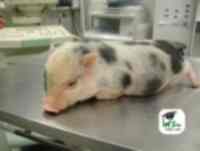
El cerdo enano vietnamita es una raza de cerdo doméstico y es uno de los nuevos animales incorporados, al ámbito familiar, como mascota. Pueden vivir hasta 20 años, siendo la media de unos 10-12. Llegan a medir de 45 a 50 cm y pesar entre 30 y 35 kg dependiendo mucho de la alimentación y el ejercicio que realice. Suelen tener más pelo que sus primos mayores y aunque generalmente son oscuros cada vez más se imponen ejemplares bicolores o incluso casi blancos.

Como son omnívoros pueden alimentarse de cualquier fracción de alimento, si bien deberemos acostumbrarles a una dieta a base de cereales (avena, cebada, maíz) con frutas y verduras. Pueden comer algo de pienso para perros como parte de un premio. El pienso que venden para cebo de cerdos no es el indicado para ellos pues con ese pienso engordarán demasiado y eso mermará su salud.

Son animales muy inteligentes y con un poco de paciencia, cariño y atención, podemos hacer de él un amigo fiel como un perro. Si a esto le añadimos una buena educación, estos animales se dejarán acariciar, comerán de nuestra mano y podremos pasearlos con una correa.

Como sus primos mayores tienen un gran sentido del olfato por lo que no habrá resto de comida que escape a su investigación. Habrá que ser cuidado con dejarnos comida olvidada pues pueden ocasionar pequeños destrozos en su afán por conseguirla.

En contra de lo que muchos pueden pensar no son sucios y no comerán ni dormirán junto donde hacen sus necesidades, que por cierto se adaptan a hacerlo en un cajón con arena como si fuese un lindo gatito. Al no tener glándulas odoríferas no sudan y al ser muy limpios podemos bañarlos una vez cada 1-2 meses, si bien en verano agradecen duchas de agua cuando el calor arrecia pues son más sensibles a climas cálidos.

Hábitat
: necesitan igualmente de un terreno pequeño para poder andar y correr o bien de paseos diarios para evitar engordar en exceso.

Son animales muy prolíficos por lo que antes de ponernos a criar con ellos debemos de haberles buscado un buen hogar a todos los lechones que tendremos para repartir.

Como animales presa que son no debemos colocarlos boca arriba dejando su vientre al descubierto pues les causa mucho estrés pudiendo, en algunos casos, reaccionar de forma inesperada.

El Corazón

  Podéis ver el trabajo sobre El Corazón, que presenté en mi clase en marzo de 2011, haciendo click aquí.

Si queréis ver el video, pronto lo subiré al you tube y pondré el enlace aquí.

Estoy de visitante en el hospital veterinario JG de Mutxamel desde hace dos años, y me lo paso muy bien.

Social Share Buttons and Icons powered by Ultimatelysocial
Follow by Email
Instagram