La procesionaria, es una plaga de los pinares del mediterráneo. Su ciclo biológico empieza en verano, en el cuál aparecen las mariosas de procesionaria, éstas se aparean y ponen huevos, en los que nacen las orugas a los 30 ó 40 días. Éstas orugas construyen nidos o bolsones de seda sobre las ramas de los pinos, los cuales los usan de refugio para pasar el invierno. Cuando llega la primavera o finales del invierno ( desde febrero a primeros de abril ), las orugan descienden en fila al suelo, de ahí su nombre Procesionaria de procesión, y van en fila hasta que se entierran y crisalidan dentro de un capullo en el cuál nacerán las mariposas en verano.
¿Cómo són estas orugas? Cómo veis en la foto, són unas orugas que están recubiertas por unos pelillos que se dispersan y flotan por el aire produciendo irritacióne la piel, ojos y nariz.
Hay que vigilar que los niños no las toquen, y nosotros tampoco porque entonces, seguramente, habrá que ir al hospital.
En los animales domésticos, sobre todo los perros ( los gatos son más cautos, aunque a veces también las tocan ) y, sobre todo los cachorros, que juegan con ellas, las olfatean y las pueden llegar a lamer, tenemos que llevar especial cuidado. Si han estado en contacto con ellas lo notaremos, primero de todo por la excesiva salivación, se frotan el morro, se ponen nerviosos, etc. Lo que tienes que hacer si ocurre esto es llevarlo urgentemente al veterinario, y si tienes una manguera cerca, lávale la boca en dirección hacia afuera, para que no se trague nada, y a continuación llevarlo corriendo al veterinario, el cuál puede volver a lavarle la boca, aunque ya lo hayas hecho antes, le pondrá medicación sintomática y antibióticos. Estas orugas son bastantes desagradables porque producen necrosis del tejido ( muerte de la zona que haya tocado a la oruga) y caída de ese tejido necrosado y, la verdad, no es nada bonito de ver. Por eso siempre se avisa de que ya ha empezado la época de la procesionaria, para que las personas procuren no llevar sus mascotas por pinares y, si se puede, que un profesional saque las bolsas o pulvorice con insecticida.
Imagen de un perro con gran inflamación de la lengua por contacto con el gusano de la procesionaria
Do you really know you when your dog is sick? Many times, our pets may show behavioural changes indicative of suffering. The owner is the only one that can detect the symptoms and will be of vital importance when it comes to communicating these to the vet.
When you get home and do not get the usual greeting or your dog does not respond in the normal manner when invited for his daily walk, he may be suffering or incubating an illness. If his appetite is not normal it can often be caused by gastritis. This can happen quite regularly (every 1 or 2 weeks) especially if fed leftovers. This type of feeding can cause a sudden change in pH or a drastic increase of gastric acids. In these cases, simply fasting the dog for 24 hours will often bring him back to normal. Nausea can manifest itself by excessive licking or salivation, the ingestion of grass or weeds. Excessive thirst is also indicative of a gastro-intestinal or sometimes urinary problems. Excessive scratching of the anal area may indicate an alteration in anal glands or a parasitic intestinal worms. Frequent shaking of the head could indicate an outer ear infection. Excessive scratching of the skin may indicate the presence of fleas, especially if the scratching happens in the posterior third. In addition to behavioural changes you should take note of the frequency and colour of the stools and urine. In neutered bitches the regularity and strength of periods can also be of importance. Respiratory symptoms such as coughing should be monitored and noted if it occurs during exertion or rest, at night or during the day… the vet will probably ask these questions. Certain breeds are more prone than others to particular diseases, common (but not exhaustive) are: Setters and Greyhounds – Distemper virus. Rottweilers – Parvovirus. West Highland Terrier – obstruction of the cardia. Shar-Pei – Entropion Dachshunds – spinal problems. Golden Retrievers – intestinal disease. Chow-Chow – moist dermatitis. Boxers – skin tumours. Pekinese – ocular prolapse. Yorkshire Terrier – liver disease and dental problems. German Shepherd – hip dysplasia. Doberman – cervical spine problems. Dogue de Bordeaux – demodectic mange. Poodle – heart disease. Collie – eye problems. Bulldog – respiratory problems. Age is another factor to take into account when it comes to certain illnesses. From one year of age it is almost impossible for a dog to have parvovirus, from 7 years onwards it is more common to encounter heart disease, osteoarthritis, cataracts, etc, and from age 10 a fairly frequent occurrence are mammary tumours, skin tumours, spleen tumours, etc.
Because our dogs cannot speak, it is up to the owner, or the person who best knows the dogs habits and spends most time with them to act as a spokesperson when visiting the veterinary. The more detailed your information is the more accurate the diagnosis by the veterinarian will be. It can make a big difference. Here is a list of the data that the animal owner should provide to the vet when your pet gets sick (which constitute the so-called medical history).
Origin
Where did you get your pet: shop, breeder, rescue home, found? Habitat and care
Where do you reside: city or countryside?
Which family member is most familiar with the pet?
What is the regular food?
How often do you batheyour pet? Which shampoo do you use?
Do you have other animals?
What kind? Have they been sick?
Where do you walk normally? Who walks the dog? How many times a day? Health status
Are the vaccinations complete and up to date?
Against which diseases?
Is the treatment against internal and external parasites up to date? Which products are being used?
When was the last time you visited a vet? Which tests were performed?
What was the last date of a blood test?
Has the animal had any surgery?
Has the animal been sick before? What medications do you give? Present illness
What’s wrong?
Since when?
What do you attribute it to?
If you are able to answer all of these questions when your pet becomes ill, it would be a great aid to a vet’s diagnosis
Dado que los reptiles también enferman y muchos de ellos muestran signos inespecíficos y muy variados muchas veces tenemos que recurrir a realizar varias pruebas diagnósticas como las radiografías, los análisis de sangre y otras incluso más completas como la endoscopía o el electrocardiograma.
Con la analítica de sangre valoramos posibles anemias, alteraciones renales, problemas del metabolismo del calcio…
Con la radiología veremos posibles fracturas, osteodistrofias, cuerpos extraños como piedras ingeridas, cálculos urinarios…
Con la ecografía podemos diagnosticar lesiones abominales como quistes, retención de huevos, derrames…
Con la endoscopia valoramos el sexaje y estados reproductivos, así como lesiones internas…
La electrocardiografía es de utilidad para valorar su frecuencia cardíaca, ritmo y su estado metabolico.
Rabbits are mammals which belong to the Lagomorph order that also includes hares and pikas (Lagomorph means ‘hare-shaped’)
Overgrown incisors due to lack of chewing material
Rabbits are mammals which belong to the Lagomorph order that also includes hares and pikas (Lagomorph means ‘hare-shaped’). They are similar to rodents in that they have incisor teeth that continually grow. The rabbit species widely kept as a pet is Oryctolagus cuniculus and within this species various breeds have been developed by enhancing different characteristics through selective breeding such as Dwarf rabbits, giant breed rabbits, lop-eared and long-haired varieties like Angora.
Description of the species and maintenance
In the wild the rabbit is a sociable and territorial animal, living in large groups within complete burrow systems known as warrens that they have dug.
Rabbits rarely face danger when threatened but use their speed and agility to escape and dart down into their warren to escape harm. Within the group the rabbits have a dominance hierarchy with the most dominant male having mating rights with the females. The rabbit is mostly nocturnal, nesting in the warrens throughout the day and emerging at dusk to forage for food until the morning. Rabbits are herbivores (plant eating) and have a high reproduction rate. They have long ears, powerful hind legs with long feet and a short, furry, upturned tail. The ideal temperature range for development is between 16-21 º C. If you keep them outdoors they must be protected from the elements, extreme temperatures and predators.
Optimal size of the cage would be 0.3 m2 per kilogram of body weight. Ideally made of galvanized steel. The size of the mesh for the floor should be 1 x 2.5cm, which allows the passage of feces into the tray and poses no risk of injury to the legs and paws.
As a general rule the cage should be at least four times the length of the fully grown rabbit when stretched out and high enough to allow the rabbit to stand on its hind legs without its ears touching the roof.
A padded area should be provided to allow a rest from the mesh. Rabbits tend to defecate in a corner of the cage, making this the ideal area for the litter box. Change the material of the litter box about twice a week. Do not place absorbent material that can be eaten as this can cause intestinal disorders.
Rabbits are playful and enjoy running and jumping and so will also need a safe exercise area with plenty of room that allows them to do this for one or two hours daily.
They need plenty of toys to chew to combat boredom: ideal materials are straw baskets, boxes or cardboard tubes, paper bags, hard plastic, wood, balls with bells inside … etc.
Food
Rabbits should be fed a basic rabbit mix and ample hay (vital for their digestive system) daily along with fruit and vegetables or plants and flowers.
The best fodder we can give our rabbits is a good quality hay. A good hay is made up of a variety of plants, has a pleasant smell and is not moldy or discolored. The hay should be placed in a special fence to enable the rabbits to forage. The concentrated food should be given in small quantities so not to cause digestive problems.
This should be high-energy foods, rich in carbohydrates such as cereals. Never feed any amount greater than 10g per kg of weight of your pet per day and always crushed. There are also rabbit pellets available in stores. These are compressed food pellets designed to meet a rabbit’s nutritional requirements. Never feed more than 40g per kg of this mixture per day. Same as with other pets, a diet based only on this can be very monotonous and therefore it should only be included as a component of the diet. Green foods can constitute 45% of the diet but you should get your animal used to it gradually increasing the amount daily until you reach the desired quantity. NEVER suddenly change the diet of your rabbit or suddenly introduce a new food. Green food can consist of clover (no more than 20% of green fodder), alfalfa, dandelion, carrots, pears and apples (peeled) … also herbs such as sage, thyme, rosemary or mint. Green food should never be left in the cage for longer than three hours. Don’t forget that our little friends love to crunch, they love branches… Birch, Beech, Alder, Poplar, Willow, Hazelnut, Apple and Pear trees are all suitable. Let us never forget that any forage, branch or item that we use in our animal feed must be free of pesticide residues, heavy metals or other hazardous substances. Always give them their food at room temperature, never cold.
Behaviour
Rabbits are very curious animals, actively exploring their environment and especially during their first year of life will gnaw and dig wherever they can. Peak activity hours occur at dawn and dusk and they often nap during the day.
Rabbits mark their territory with colourless, odourless drops which are produced by glands on the chin. If they are not neutered they may also mark their territory with urine and even faeces. Pay special attention when you let them loose in your home as they can get on furniture (long jump and even turn 180º in the air). They also like to pick up and throw small objects using their nose and mouth and love to chew. Two rabbits kept together create their own hierarchy and bonds… even mutual groom. Sleeping in many cases closely together. A rabbit may show dominance over any member of the family, although the way usual for them, differs from that we normally know. The behaviour of a rabbit with cats, dogs and ferrets differs in many cases. It is necessary to study the conditions under which they live together to identify possible risks to the rabbit. In many cases (especially ferrets) rabbits show a fear of the smell of these other pets making it impossible to cohabitate. Another aspect to consider is that rabbits although not outrageously noisy are able to vocalise. A low hum emitted by an intact male rabbit circling the owner may be a prelude to an attempted intercourse with the owner’s foot. A rabbit satisfied with a petting session can grind its teeth. However, the reluctance to grind teeth together can indicate pain. When they are wounded or frightened they can emit a high-pitched sound, as well as kick to warn of danger. The rabbit licks its front legs to wipe its face and ears and with the tongue cleans all the hair that can mould every three months. Frequent brushing and oral administration of a laxative (malt) during these periods may serve to prevent he formation of fur balls.
Just as we teach dogs and cats we can teach desired behaviour to rabbits by awarding them with treats. Keep in mind that the character may alter with hormonal changes during their season. It is possible that they show aggressiveness towards their owners and have an increase in destructiveness towards objects in the house. Males mark their territory with greater intensity.
General data
Normal body temperature from the third week of life: from 38.5 to 39.3 º C (40 º C)


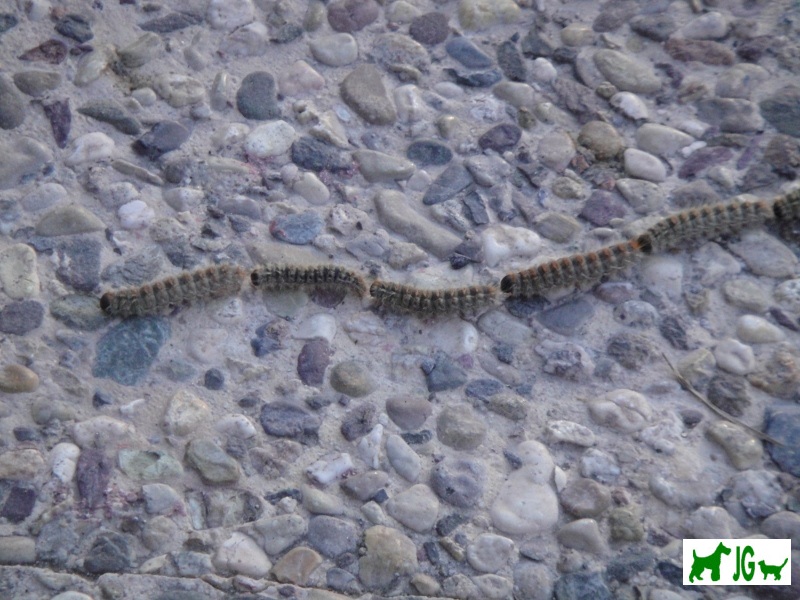


 La procesionaria, es una plaga de los pinares del mediterráneo. Su ciclo biológico empieza en verano, en el cuál aparecen las mariosas de procesionaria, éstas se aparean y ponen huevos, en los que nacen las orugas a los 30 ó 40 días. Éstas orugas construyen nidos o bolsones de seda sobre las ramas de los pinos, los cuales los usan de refugio para pasar el invierno. Cuando llega la primavera o finales del invierno ( desde febrero a primeros de abril ), las orugan descienden en fila al suelo, de ahí su nombre Procesionaria de procesión, y van en fila hasta que se entierran y crisalidan dentro de un capullo en el cuál nacerán las mariposas en verano.
 Imagen de un perro con gran inflamación de la lengua por contacto con el gusano de la procesionaria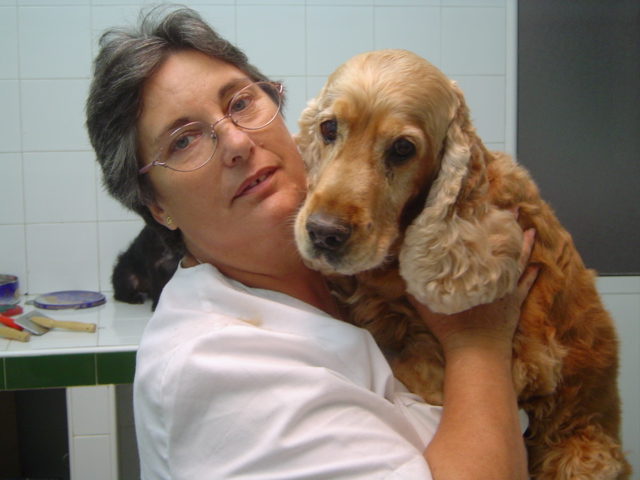

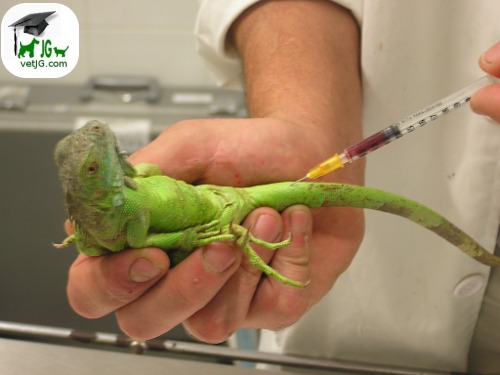


 Dado que los reptiles también enferman y muchos de ellos muestran signos inespecíficos y muy variados muchas veces tenemos que recurrir a realizar varias pruebas diagnósticas como las radiografías, los análisis de sangre y otras incluso más completas como la endoscopía o el electrocardiograma.