
The dog’s ancestors

Dogs were domesticated from the gray wolf about 15,000 years ago

Evolution and domestication

Dogs were domesticated from the gray wolf about 15,000 years ago. They perform many roles for people such as hunting, herding, protection, assisting police, companionship, and, more recently to assist handicapped people.

In 2001 there were an  estimated 400 million dogs in the world. Over the 15,000 years the dog has been domesticated, the dog has developed into hundreds of different types through selective breeding by humans and shows more behavioural and morphological variation than any other land mammal.

Origins

Dog is the commonly used term that refers to members of the Canis lupus, or «true dogs», including the wolf, coyote (canis latrans) and the jackal (canis aureus) whose main representative is the Golden Jackal, the dingo (canis dingo) and the domestic dog (canis familiaris). Wolves in North America or Eurasia appeared when the two continents were  connected by the Bering Strait and from there spread to the American continents, Europe and Asia eventually reaching the south of India, Arabia and northern Mexico. There is  evidence that the jackals originated in North Africa and from there spread to the south  and west, reaching the Malaysian peninsula as well as India and Arabia, where they  coexist with wolves. The coyote is isolated geographically from the jackals, but not the  wolves and only inhabit the Americas. Consisting of a single species that originated  recently (about 500,000 years ago) and was formed from a few packs of wolves that  were left behind after the last Ice Age. The dingo is the Australian representative of the  genus Canis, although there is evidence that in fact it was a feral dog, which reached the Australian continent from Asia, alongside the first natives. This genre would originate   from a subspecies of the wolf called Canis lupus pallipes. There are several theories about  the origin of the domestic dog the most accepted being that they are the direct descendants of the wolf. However the influence of other species in the evolution of the  domestic dog may be considered more than a suspicion, at least in some breeds. You can  see in the enormous genetic variability present in today’s domestic dog, for example the  differences between the Chihuahua and the St. Bernard, that there can only have been a multifaceted origin or it was at least heavily influenced by other species.

Domestication

Wolves and their dog descendants would have received significant benefits from living in human camps…more safety, more reliable food, lesser caloric needs, and more chance to breed. Humans would also have benefited enormously from the dogs associated with their camps. For instance, dogs would have improved sanitation by cleaning up food scraps.  They would have alerted the camp to the presence of predators or strangers, using their  acute hearing to provide an early warning. Anthropologists believe the most significant benefit would have been the use of dogs’ sensitive sense of smell to assist with the hunt. The relationship between the presence of a dog and success in the hunt is often  mentioned as a primary reason for the domestication of the wolf. The dog was our first  pet, as manifested by the numerous rock paintings found in various latitudes showing  hunting scenes. The first two contributions to man’s way of life were: the aforementioned  cooperation in hunting and the protection of the camps. At this point arose the need for  two types of dogs.

One light, brave, with good sense of smell, obedient and with the aptitude to race… the Canis familiaris leinieri, ancestor of the hound. Another, heavier, stronger, good hearing,  which would correspond with the modern guard dogs whose ancestry is Canis familiaris inostranzewi. This was soon followed by the domestication of sheep, which required a   Shepherd type dog. The shepherd dog needed to be lightweight, extremely intelligent,  and above all to have lost the instinct of aggressiveness towards cattle and sheep… their ancestor was the Canis familiaris metris-optimae.

Independently, in the northernmost regions the Canis familiaris palustris formed which  evolved into the modern sled dogs. In modern times the most widespread form of  interspecies bonding occurs between humans and dogs and the keeping of dogs as companions. In the 1950s and 1960s, dogs were kept outside more often than they tend  to be today being primarily used as a guard, children’s playmate, or walking companion.

Since then there have been huge changes in the role of the pet dog, such as the increased role of dogs in the emotional support of their owners. People and dogs have become more  and more integrated in each other’s lives, to the point where pet dogs actively shape the way a family and home are experienced.

This article was published in Costa Blanca News.

¿De qué color saldrán los gatitos de mi gata? Parte 1.

Esta pregunta nos la hemos hecho o nos la han hecho alguna vez. A partir de éste y en próximos artículos vamos a intentar adentrarnos en el tema.

Para saber la respuesta a ésta pregunta empezaremos por conocer de forma más o menos sencilla algunos términos sobre genética y que deberemos entender para poder adentrarnos en el tema.

La Eumelanina: Es un pigmento que da coloración negra, en nuestro caso, a los pelos de los gatos.

El ADN: El ADN o ácido desoxirribonucleico es  una molécula que podemos encontrar en todas las células y que contiene la información genética usada en el desarrollo y el funcionamiento de los organismos vivos, siendo  responsable de su transmisión hereditaria.

Un gen: Es una fracción de ADN que guarda la información para sintetizar una partícula, normalmente una proteína. Dicha proteína suele intervenir en una función fisiológica, en nuestro caso relativo al color del pelo. Es por ésto que un gen es considerado como la unidad de herencia genética que a su vez es transmisible por herencia. Cada gen da cabida a uno o varios alelos.

Un alelo: Es cada una de las variaciones de información que se dan en un gen. Por ejemplo: el gen para el color negro presenta 3 alelos, cada uno codifica la mayor o menor densidad de gránulos de Eumelanina a lo largo del pelo. Así una mayor densidad da el color negro, una cantidad intermedia color chocolate y una menor densidad da el color canela.

Un gameto: Es una célula germinal compuesta por una única copia de los genes del progenitor. En el caso de los gatos 19, pues presentan duplicados 18 más  los dos cromosomas sexuales, a saber el X y/o el Y, en total 38. Cada nuevo gatito se forma por la unión de una célula germinal de la madre (óvulo) con una del padre (espermatozoide). Por lo que cada nuevo gatito contará con dos fracciones del mismo gen, ocupados cada uno por sendos alelos.

Homocigosis: Cuando los dos alelos para el mismo gen son iguales.

Heterocigosis: Cuando los dos alelos para el mismo gen son distintos.

El primer gen que vamos a estudiar es el Gen B-b-b1 que codifica el color negro a través de gránulos de Eumelanina. El bandeado típico de los gatos se ve enmascarado con este color y se aprecia un color uniforme en toda su extensión.

1.-Color negro o Gen B-b-b1: cada alelo de este gen codifica una intensidad de negro  según la densidad de gránulos de Eumelanina y así el primero es negro, el segundo chocolate y el tercero canela, siguiendo un gradiente de dominancia por el cual  B se expresa siempre delante de bb1.  b se expresa en ausencia de B y sobre b1, siendo b1 recesivo a los dos anteriores.

BB: negro

Bb: negro

Bb1: negro

bb: chocolate

bb1: chocolate

b1b1: canela

¿que antiparasitario interno debo usar para mi perro o gato?

El problema de que nuestro perro o gato tenga parásitos intestinales ya no es solamente el que pueda enfermar, sino que los elimina con las heces y puede contagiar a los miembros de la familia. Hay principalmente dos tipos de gusanos intestinales en nuestros perros y gatos: los redondos (nematodos) y los planos (tenias). Tenemos que tratar a los dos tipos para poder convivir con nuestra mascota en óptimas condiciones higiénicas.

Para la prevención de la peor enfermedad parasitaria que nuestro perro nos puede transmitir (la hidatidosis o quiste hidatídico) debemos usar medicamentos que lleven en su composición praziquantel, el único principio activo que acaba con el 100% de los parásitos Equinococcus granulosus (tenia del perro productora del quiste hidatídico del hombre). En el caso del gato, este fármaco es también el único eficaz al 100% contra la tenia Dipylidium caninum, que se transmite de gato a gato por las pulgas, y es posible que también se infecte el hombre. En otro post hablaré sobre ello.

Para la prevención en nuestro perro o gato de los nematodos, o gusanos redondos, debemos usar el mejor nematocida existente: el fenbendazol. Este fármaco se encuentra en unos pocos antiparasitarios disponibles en el mercado, ya que la mayoría de ellos tienen en su composición principios activos menos modernos y de menor espectro de acción. Los nematodos también se pueden transmitir a las personas, sobre todo a las inmunodeprimidas o niños.

Como no existe ningún medicamento que lleve el praziquantel y el fenbendazol juntos, debemos combinar medicamentos que lleven estos compuestos por separado, o unos modernos medicamentos que llevan el praziquantel, que ya hemos dicho que es «obligado», y una combinación de dos o tres fármacos con efecto anti-nematodo. Según nuestra experiencia, y según nuestros veterinarios, los más eficaces son el Plerion y el Profender, para perros, y el Drontal para gatos.  Para facilitar la administración en gatos, reacios muchas veces a tomarse los comprimidos, se usan medicamentos muy eficaces para parásitos internos, pero que se aplican en la piel, con pipetas.

Otro tipo de parásitos internos que debemos combatir son las filarias, gusanos de la sangre de perros y gatos, que son transmitidos por picaduras de mosquitos. Existen fármacos muy eficaces para combatirlos, muchos de ellos asociados a los anteriormente citados.

¿con que periodicidad debo tratar a mi perro o gato contra los gusanos intestinales y otro tipo de parásitos internos?. Realmente varía según el nivel de contacto de la mascota con la familia, el tipo de alimentación, la edad, el sitio donde vive, etc…   Revise el plan antiparasitario de su mascota y si no lo tiene claro, póngase en contacto con nosotros para realizarle un plan personalizado.

¿estás buscando una mascota? ¿conoces alguna mascota que necesite un hogar?

Ponemos en contacto gente con mascotas para dar en adopción con gente que tiene un hogar para dar a la mascota.

A través de este apartado ponemos en contacto gente que tiene mascotas para dar en adopción con otros que quieren adoptar mascotas.

Si conoces a alguna que necesite un hogar, mándamos su foto y algunos datos básicos (nombre, raza, lugar de residencia, etc) a adopciones@vetjg.es y la publicamos en este blog.

Si quieres darle un hogar a una mascota que lo necesita, permanece atento a esta sección, o suscríbete para recibir los anuncios en tu mail.

¿ que nombre le pongo a mi mascota ?

Buena pregunta eh?. Los nombres de mascotas varían con las modas, aunque los míticos Linda, Tom, Tarzán, Trasto, Sultán, Misi, Yaco, etc.. todavía perduran.

Hoy en día aparecen por nuestra clínica mascotas con nombres más «modernos», como ZP, PP, Gadafi, Ipad, etc..

En este enlace tenéis unos cuantos miles de nombres de mascotas, en un listado de hace aproximadamente 8 años, donde comprobaréis, por ejemplo, que hay 459 Lindas, y 160 mascotas con el nombre Tom.

En otro post os colocaré todos los nombres a fecha más reciente, para que podáis comparar.

Nuevas mascotas en la clínica veterinaria (3ª parte)

¿Nueva mascota?. Este gracioso prociónido puede proporcionarnos tanto buenos momentos como peliagudas situaciones de estrés.

Hay que ser consciente a la hora de adquirir una nueva mascota, sea la que sea, de la gran responsabilidad que tenemos al hacerlo. Debemos ser capaces de cubrir todas sus necesidades y estudiar el comportamiento de dicha mascota hasta asegurarnos de que podremos convivir con ella. Un ejemplo muy claro es el que nos trae a colación en este artículo, el Coatí.

El Coatí es un pariente cercano del Mapache y como éste nos resulta entrañable y cariñoso. Existen varias especies con distinto tamaño pero con un comportamiento similar en lo fundamental. De adulto suelen pesar alrededor de 4-8kg y medir alrededor de medio metro. Durante su primer año de vida suelen ser bebés  adorables , curiosos, inteligentes y hábiles. Cualidades que de adultos los vuelven cuando menos traviesos, inquietos y pillos.

Hay que estar muy encima de ellos para que se habitúen a nosotros, sino tornará su comportamiento afable a hosco. Conforme crecen se vuelven dominantes, más las hembras, posesivos y territoriales pudiendo reaccionar mal frente a extraños o ante el dueño. Deberán tener una buena educación desde pequeños. No se admiten mordiscos durante los juegos y demás acciones correctivas.

Si pese a todo lo anterior tenemos las condiciones adecuadas para poder tener a uno de estos animales en nuestra casa habrá que tener en cuenta otros aspectos de su dieta y cuidados.

El hábitat ideal que podemos buscarle es una habitación acondicionada para él (sin cosas que pueda destrozar) y así cuando no podemos tenerlo controlado que esté en ella o bien una jaula de unos 10-20 metros cuadrados en un patio, con zona resguardada y zona libre. No soportan las temperaturas extremas, ni en cuanto a frío como a calor.

Debido a su carácter intrépido habrá que acotar ciertas partes de la casa donde no queramos que entren y guardar cualquier objeto sensible a ser destruido. Es por eso que habremos de proporcionarle nuevos juegos y entretenimientos para que no se aburra y vuelva agresivo.

En su rutina diaria los coatíes están acostumbrados a escarbar en la tierra, deshojar vegetación, morderla y despreciar ciertas partes de la fruta que no son de su agrado por lo que suelen ensuciar bastante cuando comen. La alimentación es omnívora, pudiendo en cautividad acostumbrarse a un pienso de cachorro canino de buena calidad y a frutas y verduras, con algún premio en forma de huevos o caracoles. De tornarse rollizo bastará con cambiar el pienso a uno de adultos o dietético y quitarles ciertos caprichos.

Una  visita al veterinario podrá ayudarnos a saber si nuestra nueva mascota está en perfectas condiciones y éste nos explicará las pautas de desparasitaciones y vacunaciones que hay que seguir con ellos.

¿necesitas una guía básica de cuidados de tu perro o gato? descárgatela o ven a por ella

En este blog tratamos de dar la máxima información sobre la salud de las mascotas de nuestros clientes. Vamos incorporando día a día artículos que seguro que aclaran muchas dudas sobre los cuidados.

Nuestros clientes siempre tienen disponible la atención on line con los médicos de sus mascotas.

En este enlace tenéis una guía de cuidados del  cachorro y en éste una guía de cuidados del gatito.  También las tenemos en formato libro, pasad a recogerlas gratuitamente (preguntad por mí).

Iremos añadiendo más cosas útiles en este blog.   Suscríbete y sé el primero en enterarte ¡¡

The hamster as a pet

The word ‘hamster’ comes from the German word ‘hamstern’ which means ‘to hoard’.

Zoological Classification

  • Kingdom: Animal
  • Class: Mammal
  • Order: Rodentia
  • Family: Muridae
  • Subfamily: Cricetinae

Originating in Europe, Middle East, North Africa, China and Siberia.

Syrian or golden  hamster – Mesocricetus auratus

Chinese hamster – Cricetulus griseus

European hamster –  Cricetus cricetus

Dwarf hamster djungariana/Russian / songoru- Phodopus sungorus
Roborovskii dwarf hamster – Phodopus roborovskii

In the wild the golden brown-red colour develops with dense, short hair. The domestic  hamster descended from three siblings, one male and two females located in Syria in  1931. There are many different species of hamsters throughout the world and most The hamster as a pet hamsters inhabit semi-desert areas where they live in burrows. These  burrows consist of many tunnels and separate chambers including chambers where the  hamster will store food and sleep. Hamsters are nocturnal, sleeping during the hot days and waking in the cooler evenings. They have very poor eyesight but a keen sense of  smell and excellent hearing. Most species of hamsters have expandable cheek pouches in which they can carry food and bedding back to their burrow where they will store food.  The word ‘hamster’ comes from the German word ‘hamstern’ which means ‘to hoard’.

Maintenance

There are a huge variety of cage styles and sizes and which one to choose can be  confusing. Make sure you choose one that is appropriate for the size of hamster you are  choosing as well as one that is easy to clean. Also make sure you have cage accessories  such as bedding, an exercise wheel, and a cozy sleep hut picked out. A variety of products made out of cotton or similar materials are marketed as nesting material. However, there  are potential problems with using some of these products. Many commercial nesting materials are actually made up of very small threads or fibres. These threads can  sometimes get wound around little hamster toes and cause injuries. Also, if your hamster eats some of these bedding, the fibres may not be digestible. While the risks are small,  there are easier alternatives. Simply use undyed and unscented toilet paper, facial tissue,  or soft paper towels. You can shred these a bit but you can let your hamster finish  shredding them and crafting them into a soft cozy nest.

A good exercise wheel will help keep your hamster healthy. In the wild, hamsters would  travel miles every night in search of food, and some hamsters in captivity have been reported to run up to 8 km per night on their exercise wheels. Hamsters need lots of exercise and most pet hamsters love to use exercise wheels. The best kind of hamster wheel has a solid surface that either attaches to the side of the cage or is free standing. The common wire wheel that looks like a ladder wrapped into a circle with side bars for support is not the best choice as it can cause injuries. Hamsters need to be able to chew. For chewing, a variety of wood structures and toys will help keep your hamster’s teeth in shape. Hamsters also tend to like playing with tubes and tunnels and things they can climb on.

Excessive cleaning of the cage can cause stress to the animals as it alters the territorial markings. The cage should be cleaned weekly by removing the hamster from the cage and throwing away old bedding and food. However, your pet will appreciate it if some of its old bedding is placed in the clean cage along with the fresh bedding.

Food

Your pet hamster requires a fairly regular diet consisting of proteins, vitamins and  minerals. Your pet will be quite happy to be fed about once a day, usually in the early  evening, when it is starting to wake up.

Recommended 5-10 grams a day with a 16-24% protein, 60-65% carbohydrate, 5-7% fat. It is recommended to supplement the diet with seeds, grains, fruit and vegetables to provide variety without unbalancing the intake of nutrients. Hamsters need a regular supply of fresh water. You should either provide a water bowl filled with fresh water daily, or you can use a small animal water bottle.

Handling

The most important thing you need to know is that hamsters are nearsighted and have  very limited view. Hamsters only bite if scared or uncomfortable. You can move them  with your hands or if they are aggressive with a container (empty and clean). Be careful when you pick up a hamster that is asleep, to wake up abruptly can cause them to bite.

Anatomy

Hamsters have poor eyesight; they are nearsighted and colorblind. However, they have an acute sense of smell and can hear extremely well. Hamsters can use their sense of smell to detect gender, locate food, and detect pheromones. They are also particularly  sensitive to high-pitched noises and can hear and communicate in the ultrasonic range. One characteristic of rodents that is highly visible in hamsters is their sharp incisors. They have two pairs in the front of their mouths and these incisors never stop growing  and thus must be regularly worn down. Hamsters carry food in their spacious cheek pouches to their underground storage chambers. When full, their cheeks can make their heads double (or even triple) in size. Have an odoriferous gland that serves for marking  territory, individual identification and possibly sexual attraction.

General data on the  golden hamster

Average life: 2-3 years
Body length: 9-18 (as races)
Adult female weight: 90-180g
Adult male weight: 80-140g
Birth weight: 1.5-3g
Daily water intake: 12-30ml
Daily food consumption: 10-15g
Breeding: Hamsters become fertile at different ages depending on their species, but this can be from one month to three months of age. The female’s reproductive life only lasts  about 18 months, but male hamsters remain fertile much longer. Females are in heat approximately every four days, indicated by a reddening of genital areas.

Hamsters are seasonal breeders. Breeding season is from April to October in the northern  hemisphere, with two to five litters of 1 to 13 young being born after a gestation period of 16 to 23 days. Golden hamster females are also very aggressive toward male  hamsters and must be separated immediately after breeding in order to prevent an attack. Female hamsters are also particularly sensitive to disturbances while giving birth and may even eat her own young if she thinks they are in danger, although sometimes she is just carrying the pups in her cheek pouches. Hamsters are born hairless and blind in a nest that the mother will have prepared in advance. After one week they begin to  explore outside the nest. They are completely weaned after three weeks, or four for  Roborovski hamsters.

This article was published in Costa Blanca News.

Como crear una pequeña reserva natural y disfrutar de ella

Es muy fácil, si queremos disfrutar viendo muchas especies animales en nuestro jardín o en nuestra casa de campo tenemos que procurar que haya comida y agua. El agua, de la lluvia a ser posible, se conserva en algún estanque, de pequeña profundidad, que improvisemos con algún plástico impermeable. Este agua es necesaria para un sinfín de especies, vertebrados e invertebrados.

Pero para darle más vida animal a nuestro terreno necesitamos empezar por abajo de la pirámide alimentaria: necesitamos tener plantas. Para ello colocaremos unas semillas (alpiste, cañamones, mijo, etc..) o mejor aún, haremos una pequeña siembra. Estas plantas y sus semillas traerán un ejército de insectos, por tierra y aire, que a su vez serán fuente de alimento de aves, reptiles y pequeños mamíferos, los cuales a su vez servirán de alimento para otras aves, otros reptiles y otros mamíferos, y asi sucesivamente.  En poco tiempo tendremos muy cerca de nosotros a numerosas especies de pájaros insectívoros como el petirrojo o el herrerillo, pájaros granívoros como el verdecillo, el jilguero, etc.., un ejército de hormigas, cucarachas, gusanos, lagartijas, etc.., todos ellos fuente de alimento de otros animales.

Tenemos que tener en cuenta que el pequeño estanque será también el hábitat de anfibios, insectos, y un largo etcétera de especies, que también se incorporarán a la cadena alimentaria.

Para disfrutar de esta variedad de animales necesitamos de un observatorio, desde donde, con un poco de paciencia, realizaremos fotografías de la gran variedad de animales que acuidirán a comer y a beber.

Si ya queremos disfrutar con una mayor presencia de animales carnívoros, será necesario fomentar la presencia de los temidos «pequeños roedores» en nuestra reserva. Esto se consigue colocando un pequeño vertedero, con restos de comida, latas, etc.., que a buen seguro incrementará la presencia de ratas y ratones, manjar exquisito de determinados depredadores del tipo de aves, rapaces (cernícalos, o mochuelos, por ejemplo) y no rapaces (alcaudón, arrendajo, etc.. ),  reptiles (como lagartos y serpientes, como la bastarda, muy frecuente en nuestros terrenos), y como no, de depredadores mamíferos como la garduña o la comadreja.

Con un poco de suerte, y dependiendo de la zona,  también fomentaremos la presencia de otros grandes herbívoros, como los conejos y jabalíes, y de otros grandes carnívoroso como los zorros, etc…

Sin quererlo, habremos provocado una actividad frenética de vida, diurna y nocturna, en nuestro terreno.

Ala, si te gusta  disfrutar de la naturaleza y de la caza fotográfica, ya sabes por donde empezar.

Tenéis un ejemplo en este enlace.

También tenéis un pequeño listado de las especies de aves y de reptiles presentes en España.

Alimentación y cuidados de un Gerbo en casa.

Los Jerbos suelen ser animales muy curiosos y confiados.

Comportamiento: Los gerbos son animales limpios, relativamente inodoros, de naturaleza curiosa y fáciles de manejar.  De hecho son tan amigables que subirán sin problemas sobre tu mano para coger un alimento que le ofrezcas aunque no les dediques mucho tiempo. Su vida es principalmente nocturna aunque saldrán de su cama si escuchan algún ruido que les cause incertidumbre.

Han desarrollado la capacidad para reservar agua, aunque eso no quiere decir que no les pongamos, la necesitan igual que todos. Otra medida adaptativa que presentan es la tolerancia que tienen a  oscilaciones considerables de temperatura, incluso de 30ºC.  Si bien se aconseja que su temperatura ronde los 17-22ºC y con una humedad no mayor del 50%, sino su pelo se tornará mate y de aspecto grasiento.

Suelen llevarse bien aquellos que desde pequeños se han criado juntos, aún así es posible que si hay que separarlos durante un tiempo, al volverlos a juntar riñan, es mejor hacerlo poco a poco. Las hembras suelen ser más agresivas que los machos.

Hábitat: Para su contención en casa se pueden usar jaulas de metal con base de plástico o bien contenedores de cristal especiales tipo terrario, siempre y cuando tengan una buena ventilación y no haya concentración de gases. En el caso de usar jaulas hay que asegurarnos que no pasan entre los barrotes pues son muy ágiles y capaces de escapar por la mínima rendija.

Como substrato se recomienda el uso de turba (depositar unos  5cm de grosor) y para el nido se aconseja por ejemplo papel. Las fibras artificiales como en la mayoría de especies pequeñas no se aconsejan porque pueden producir isquemias de miembros llegando incluso a la amputación. Incluso si se ingieren dichas fibras podrían provocar problemas digestivos. Tampoco es adecuado poner arena pues podrían sufrir abrasiones en el rostro, no es lo mismo tener todo un campo libre para desarrollar la actividad que los confines de una jaula.

Alimentación: Una mezcla de semillas con gránulos proteicos (bastarán unos pocos de los que le sobren al gato) además de verduras frescas es una buena base en su alimentación. Las semillas oleosas (girasol, sésamo…) y los frutos secos les gustan mucho, podemos ofrecérselos como golosinas pero no como dieta única pues podrían sufrir de osteodistrofia/osteoporosis por deficiencia de calcio, que conlleve problemas mayores como fracturas y alteraciones óseas.

Cuidados basicos: la boca

Para darle una buena higiene bocal a tu mascota, hay que saber muy bien a que nos podemos enfrentar y saber distinguir entre sano y enfermo.En este articulo encontraras pautas y opciones a una buena higiene.

Todos sabemos lo importante que es para nosotros tener una boca fresca y limpia,pero a veces no imponemos esas normas tan habituales en nosotros  a nuestros animales a pesar de la misma importancia, más de la mitad de los perros tienen problemas bucales y no lo sabemos. Con este articulo os daré una serie de pautas para que sea mas fácil prevenir las enfermedades periodontales.

¿CÓMO SABEMOS SI HAY ALGÚN PROBLEMA EN LA BOCA DE NUESTRO ANIMAL?

Ellos no tienen un cepillado como el nuestro a diario, a si que la probabilidad de sarro y enfermedades  sera mayor, hay que explorar a menudo la boca y saber como es y cuando tiene un problema.

Esta compuesta de los dientes: los dientes de leche son 28,a partir de los 4 meses de edad aparece los dientes definitivos 42 en total(los de adulto). Cuando son cachorros muchos de ellos no desechan los dientes de leche y impide que salga con naturalidad en diente definitivo, en tal caso hay que ir al veterinario y el nos aconsejara lo mejor para nuestra mascota,generalmente la solución  es  mediante una pequeña cirugía.El mal aliento o la salivación son una de las causas mas frecuentes en enfermedades bucales cuando empieze a notar estos sintomas lo mejor es ir a su veterinario y que él le aconseje,una de las ultimas fases es que nuestro amigo  es que deje de comer, pero no queremos llegar a ese estado, por eso os dejo estas fáciles pautas a llevar a cabo todos los días, de esta forma conociendo sabremos mejor diferenciar entre boca sana y boca enferma.
TRATAMIENTO:
Las limpiezas de boca son algo de lo mas común a medida que pasa el tiempo, ya ponemos en practica muchos de nuestros aparatos en ellos,y el de limpiar bocas es uno de ellos, el auxiliar que hace limpiezas de boca ya sabe a lo que se enfrenta con cada una de ellas, mucho sarro, exeresis de dientes,sangrado en encias o simplemente una limpieza de boca rutinaria,esto ultimo es la solución a que nuestro perro o gato sufra de dolores bocales.Hay situaciones irreversibles que desembocan a patologias extremas y a perdida de dientes Provocando gran dolor y un olor insoportable.


PREVENCIÓN:

Por ello os animo a que les enseñeis desde cachorros con cepillos para su salud bucal,a si cuando sean adultos lo verán como una cosa normal,hacer lipiezas de boca rutinarias como nosotros una vez al año o cada 6 meses .Darles los palitos dental stick una vez al día.La alimentación desde cachorros es muy importante a la hora de su higiene y crecimiento.

Razas mas frecuente:
Los yorkshire terrier el una raza muy propensa  de tener estas enfermedades, sobre todo acumulan sarro, también los caniches y las razas toy . Así que si usted tiene como amigo a una  de estas razas la prevención sera mayor.

La Procesionaria

La procesionaria es una oruga que no hace gracia.

La procesionaria, es una plaga de los pinares del mediterráneo. Su ciclo biológico empieza en verano, en el cuál aparecen las mariosas de procesionaria, éstas se aparean y ponen huevos, en los que nacen las orugas a los 30 ó 40 días. Éstas orugas construyen nidos o bolsones de seda sobre las ramas de los pinos, los cuales los usan de refugio para pasar el invierno. Cuando llega la primavera o finales del invierno ( desde febrero a primeros de abril ), las orugan descienden en fila al suelo, de ahí su nombre Procesionaria de procesión, y van en fila hasta que se entierran y crisalidan dentro de un capullo en el cuál nacerán las mariposas en verano.

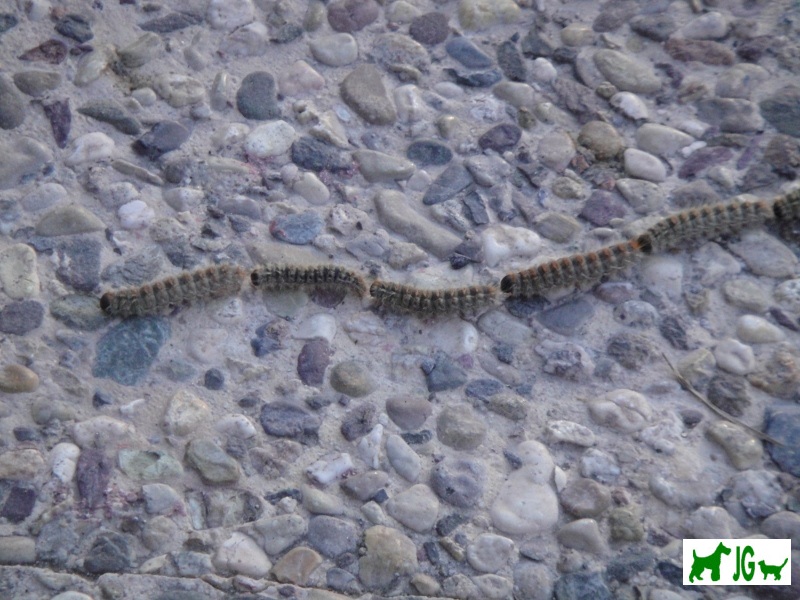
¿Cómo són estas orugas? Cómo veis en la foto, són unas orugas que están recubiertas por unos pelillos que se dispersan y flotan por el aire produciendo irritacióne la piel, ojos y nariz.

Hay que vigilar que los niños no las toquen, y nosotros tampoco porque entonces, seguramente, habrá que ir al hospital.

En los animales domésticos, sobre todo los perros ( los gatos son más cautos, aunque a veces también las tocan ) y, sobre todo los cachorros, que juegan con ellas, las olfatean y las pueden llegar a lamer, tenemos que llevar especial cuidado. Si han estado en contacto con ellas lo notaremos, primero de todo por la excesiva salivación, se frotan el morro, se ponen nerviosos, etc. Lo que tienes que hacer si ocurre esto es llevarlo urgentemente al veterinario, y si tienes una manguera cerca, lávale la boca en dirección hacia afuera, para que no se trague nada, y a continuación llevarlo corriendo al veterinario, el cuál puede volver a lavarle la boca, aunque ya lo hayas hecho antes, le pondrá medicación sintomática y antibióticos. Estas orugas son bastantes desagradables porque producen necrosis del tejido ( muerte de la zona que haya tocado a la oruga) y caída de ese tejido necrosado y, la verdad, no es nada bonito de ver. Por eso siempre se avisa de que ya ha empezado la época de la procesionaria, para que las personas procuren no llevar sus mascotas por pinares y, si se puede, que un profesional saque las bolsas o pulvorice con insecticida.

Imagen de un perro con gran inflamación de la lengua por contacto con el gusano de la procesionaria

When your dog is ill

Do you really know you when your dog is sick? Many times, our pets may show behavioural changes indicative  of suffering. The owner is the only one that can detect the symptoms and will be of vital importance when it comes to communicating these to the vet.
When you get home and do not get the usual greeting or your dog does not respond  in the normal manner when invited for his daily walk, he may be suffering or  incubating an illness. If his appetite is not normal it can often be caused by gastritis. This can happen quite regularly  (every 1 or 2 weeks) especially if fed leftovers. This type of feeding can cause a sudden change in pH or a drastic increase of gastric acids. In  these cases, simply fasting the dog for 24 hours will often bring him back to normal. Nausea can manifest itself by excessive licking or salivation, the ingestion of  grass or weeds. Excessive thirst is also indicative of a gastro-intestinal or sometimes urinary problems.
Excessive scratching of the anal area may indicate an alteration in anal glands or a parasitic intestinal worms. Frequent shaking of the head could indicate an outer ear infection. Excessive scratching of the skin may indicate the presence of fleas, especially if the scratching happens in the posterior third. In addition to behavioural changes you should take note of the frequency and colour of the stools and urine. In neutered bitches the regularity and strength of periods can also be of importance. Respiratory symptoms such as coughing should be monitored and noted if it occurs during exertion or rest, at night or during the day… the vet will probably ask these questions. Certain breeds are more prone than others to particular diseases, common (but not exhaustive) are: Setters and Greyhounds – Distemper virus. Rottweilers – Parvovirus. West Highland Terrier – obstruction of the cardia. Shar-Pei – Entropion Dachshunds – spinal problems. Golden Retrievers – intestinal disease. Chow-Chow – moist dermatitis. Boxers – skin tumours. Pekinese – ocular prolapse. Yorkshire Terrier – liver disease and dental problems. German Shepherd – hip dysplasia. Doberman – cervical spine problems. Dogue de Bordeaux – demodectic mange. Poodle – heart disease. Collie – eye problems. Bulldog – respiratory problems. Age is another factor to take into account when it comes to certain illnesses. From one year of age it is almost impossible for a dog to have parvovirus, from 7 years onwards it is more  common to encounter heart disease, osteoarthritis, cataracts, etc, and from age 10 a fairly frequent occurrence are mammary tumours, skin tumours, spleen tumours, etc.

Because our dogs cannot speak, it is up to the owner, or the person who best knows the dogs habits and spends most time with them to act as a spokesperson when visiting the veterinary. The more detailed your information is the more accurate the diagnosis by the veterinarian will be. It can make a big difference. Here is a list of the data that the animal owner should provide to the vet when your pet gets sick (which constitute the so-called medical history).

Origin
Where did you get your pet: shop, breeder, rescue home, found?
Habitat and care
Where do you reside: city or countryside?
Which family member is most familiar with the pet?
What is the regular food?
How often do you batheyour pet? Which shampoo do you use?
Do you have other animals?
What kind? Have they been sick?
Where do you walk normally? Who walks the dog? How many times a day?
Health status
Are the vaccinations complete and up to date?
Against which diseases?
Is the treatment against internal and external parasites up to date? Which products are being used?
When was the last time you visited a vet? Which tests were performed?
What was the last date of a blood test?
Has the animal had any surgery?
Has the animal been sick before? What medications do you give?
Present illness
What’s wrong?
Since when?
What do you attribute it to?
If you are able to answer all of these questions when your pet becomes ill, it would be a great aid to a vet’s diagnosis

This article was published in Costa Blanca News.
Técnicas diagnósticas en reptiles

  • Dado que los reptiles también enferman y muchos de ellos muestran signos inespecíficos y muy variados muchas veces tenemos que recurrir a realizar varias pruebas diagnósticas como las radiografías, los análisis de sangre y otras incluso más completas como la endoscopía o el electrocardiograma.
  • Con la analítica de sangre valoramos posibles anemias, alteraciones renales, problemas del metabolismo del calcio…
  • Con la radiología veremos posibles fracturas, osteodistrofias, cuerpos extraños como piedras ingeridas, cálculos urinarios…
  • Con la ecografía podemos diagnosticar lesiones abominales como quistes, retención de huevos, derrames…
  • Con la endoscopia valoramos el sexaje y estados reproductivos, así como lesiones internas…
  • La electrocardiografía es de utilidad para valorar su frecuencia cardíaca, ritmo y su estado metabolico.

Pet Rabbits

Rabbits are mammals which belong to the Lagomorph order that also includes hares and pikas (Lagomorph means ‘hare-shaped’)

Overgrown incisors due to lack of chewing material

Rabbits are mammals which belong to the Lagomorph order that also includes hares and pikas (Lagomorph means ‘hare-shaped’). They are similar to rodents in that they have  incisor teeth that continually grow. The rabbit species widely kept as a pet is Oryctolagus cuniculus and within this species various breeds have been developed by enhancing different characteristics through selective breeding such as Dwarf rabbits, giant breed rabbits, lop-eared and long-haired varieties like Angora.

Description of the species and maintenance

In the wild the rabbit is a sociable and territorial animal, living in large  groups within complete burrow systems known as warrens that they have dug.

Rabbits rarely face danger when threatened but use their speed and agility to escape and dart down into their warren to escape harm. Within the group the rabbits have a  dominance hierarchy with the most dominant male having mating rights with the females. The rabbit is mostly nocturnal, nesting in the warrens throughout the day and emerging at dusk to forage for food until the morning. Rabbits are herbivores (plant eating) and  have a high reproduction rate. They have long ears, powerful hind legs with long feet and  a short, furry, upturned tail. The ideal temperature range for development is between 16-21 º C. If you keep them outdoors they must be protected from the elements, extreme temperatures and predators.

Optimal size of the cage would be 0.3 m2 per kilogram of body weight. Ideally made of galvanized steel. The size of the mesh for the floor should be 1 x 2.5cm, which allows the passage of feces into the tray and poses no risk of injury to the legs and paws.

As a general rule the cage should be at least four times the length of the fully grown rabbit when stretched out and high enough to allow the rabbit to stand on its hind legs without its ears touching the roof.

A padded area should be provided to allow a rest from the mesh. Rabbits tend to defecate in a corner of the cage, making this the ideal area for the litter box. Change the material of  the litter box about twice a week. Do not place absorbent material that can be eaten as   this can cause intestinal disorders.

Rabbits are playful and enjoy running and jumping and so will also need a safe exercise area with plenty of room that allows them to do this for one or two hours daily.

They need plenty of toys to chew to combat boredom: ideal materials are straw baskets, boxes or cardboard tubes, paper bags, hard plastic, wood, balls with bells inside … etc.

Food

Rabbits should be fed a basic rabbit mix and ample hay (vital for their digestive system) daily along with fruit and vegetables or plants and flowers.

The best fodder we can give our rabbits is a good quality hay. A good hay is made up of a variety of plants, has a pleasant smell and is not moldy or discolored. The hay should be  placed in a special fence to enable the rabbits to forage. The concentrated food should be  given in small quantities so not to cause digestive problems.

This should be high-energy foods, rich in carbohydrates such as cereals. Never feed any amount greater than 10g per kg of weight of your pet per day and always crushed. There are also rabbit pellets available in stores. These are compressed food pellets designed to  meet a rabbit’s nutritional requirements. Never feed more than 40g per kg of this  mixture per day. Same as with other pets, a diet based only on this can be very  monotonous and therefore it should only be included as a component of the diet. Green  foods can constitute 45% of the diet but you should get your animal used to it gradually increasing the amount daily until you reach the desired quantity. NEVER suddenly  change the diet of your rabbit or suddenly introduce a new food. Green food can consist of clover (no more than 20% of green fodder), alfalfa, dandelion, carrots, pears and apples (peeled) … also herbs such as sage, thyme, rosemary or mint. Green food should never be  left in the cage for longer than three hours. Don’t forget that our little friends love to  crunch, they love branches… Birch, Beech, Alder, Poplar, Willow, Hazelnut, Apple and  Pear trees are all suitable. Let us never forget that any forage, branch or item that we use  in our animal feed must be free of pesticide residues, heavy metals or other hazardous substances. Always give them their food at room temperature, never cold.

Behaviour

Rabbits are very curious animals, actively exploring their environment and  especially during their first year of life will gnaw and dig wherever they can. Peak activity  hours occur at dawn and dusk and they often nap during the day.

Rabbits mark their  territory with colourless, odourless drops which are produced by glands on the chin. If  they are not neutered they may also mark their territory with urine and even faeces. Pay special attention when you let them loose in your home as they can get on furniture (long jump and even turn 180º in the air). They also like to pick up and throw small objects using their nose and mouth and love to chew. Two rabbits kept together create their own  hierarchy and bonds… even mutual groom. Sleeping in many cases closely together. A  rabbit may show dominance over any member of the family, although the way usual for  them, differs from that we normally know. The behaviour of a rabbit with cats, dogs and  ferrets differs in many cases. It is necessary to study the conditions under which they live  together to identify possible risks to the rabbit. In many cases (especially ferrets)  rabbits show a fear of the smell of these other pets making it impossible to cohabitate. Another aspect to consider is that rabbits although not outrageously noisy are able to vocalise. A low hum emitted by an intact male rabbit circling the owner may be a prelude  to an attempted intercourse with the owner’s foot. A rabbit satisfied with a petting session  can grind its teeth. However, the reluctance to grind teeth together can indicate  pain. When they are wounded or frightened they can emit a high-pitched sound, as well as  kick to warn of danger. The rabbit licks its front legs to wipe its face and ears and with  the tongue cleans all the hair that can mould every three months. Frequent brushing and  oral administration of a laxative (malt) during these periods may serve to prevent  he formation of fur balls.

Just as we teach dogs and cats we can teach desired behaviour to rabbits by awarding them with treats. Keep in mind that the character may alter with hormonal changes  during their season. It is possible that they show aggressiveness towards their owners and have an increase in destructiveness towards objects in the house. Males mark their  territory with greater intensity.

General data

  • Normal body temperature from the third  week of life: from 38.5 to 39.3 º C (40 º C)
  • Weight at birth: 30-80gsm.
  • Age at which they open their eyes: 10-14 days.
  • Weaning: 5-8 weeks
  • Life expectancy: (5) 8-10 (12) years
  • Adult weight: 1-10 kilos according to breed
  • Daily consumption of food grain: 50g/kg
  • Sexual maturity between 10-18 weeks
  • Gestation length: 31-35 days
  • Number of offspring per litter: 4-12 (15)
  • Number of litters per year: 3-10

This article was published in Costa Blanca News.

Jarra mug gratis para nuestros suscriptores!

Regalamos una jarra de animales a nuestros suscriptores!

Suscribirse a nuestro blog es muy sencillo, sólo tienes que elegir la categoría o categorías de noticias que te interesa y rellenar tu dirección de correo electrónico. Así recibirás cómodamente en tu email los artículos que vayamos publicando y que te ayudarán a cuidar mejor de tu mascota.

Si eres suscriptor pásate por nuestro supermercado y recoge la jarra mug que más te guste! (sin obligación de compra).

Y si todavía no lo eres, visita nuestra página de suscripción y elige tu categoría preferida (o más de una!).

Las jarras mug estarán disponibles para nuestros suscriptores hasta el 30 de abril ( ¡¡ PLAZO PRORROGADO HASTA EL 8 de mayo de 2011 ¡¡ ), limitadas a 1 jarra por suscriptor. Indícanos tu email cuando vengas a por ella.

Pásate a recoger la que más te guste!

Prevención vacunal frente al virus del moquillo en Hurones.

Además de utilizar una correcta pauta de vacunación, es imprescindible controlar la aparición de posibles efectos secundarios.

La vacuna frente al moquillo es la más importante en la pauta vacunal de los hurones. Se recomienda usar una vacuna viva modificada para proteger contra el moquillo. Las vacunas muertas no ofrecen una protección fiable. Se deben usar vacunas que no deriven de líneas celulares de hurón porque los hurones vacunados con estas líneas celulares pueden reproducir la enfermedad, especialmente en animales inmunodeprimidos o enfermos crónicos.

Hay que evitar, en lo posible, utilizar vacunas multivalentes caninas, que pueden estar asociadas a efectos adversos. Si bien su uso hoy en día no parece entrañar peligro pues es larga la experiencia que se tiene en su uso y hay que recordar que en España no se comercializan vacunas contra moquillo aprobadas para hurones, como ocurre en otros países.

Si un brote ocurre en un grupo de hurones susceptibles, todos los animales clínicamente afectados deberían ser aislados, y los hurones sanos inmediatamente vacunados. Sin embargo, vacunar a los hurones no vacunados en el comienzo de un brote puede no parar la infección y la mortalidad. El moquillo es relativamente lábil y su infectividad es destruida por el calor, la sequedad ambiental, los detergentes y los desinfectantes. Una pauta rutinaria de limpieza y desinfección es efectiva para destruir el moquillo en superficies duras.

La vida media de los anticuerpos maternales contra el virus del moquillo canino en hurones es de unos 9 días y medio. Hay que administrarles a los hurones series vacunales a las 6-8, a las 10-12 y a las 13-14 semanas de edad. Administrando recuerdos de vacunación anualmente.

Hay informes anecdóticos de reacciones seguidas a vacunación de moquillo en hurones. Los hurones pueden vomitar, tener diarrea y presentar eritemas en la piel junto con algo de fiebre. Los hurones deberan estar monitorizados en la sala de espera o por el propietaro al menos 30 minutos despues de recivir la vacuna del moquillo. También tenemos que asegurarnos de que no lleven mucho tiempo en ayunas antes de aplicarles la vacuna pues así ayudaremos a pasar el mal trago mejor.

Las revacunaciones de moquillo se harán cada 3 semanas después de la primera aplicación (hacia la 6-8ª semana) y con un total de 3 aplicaciones. La administración de sólo 2 vacunas no aseguraría la inmunidad del animal en caso de que se produzca un brote de moquillo.Los hurones adultos no vacunados de cachorro deberían ser vacunados 3 veces con una cadencia de 15-21 días.

Keeping pet reptiles (Part II)

This article continues this previous article on Keeping Pet Reptiles and deals with aspects like Diet and Humidity of reptiles.

This article continues this previous article on Keeping Pet Reptiles.

Humidity: Humidity in a reptile’s enclosure is important at all times. It can influence  appetite and shedding. Each species has its own level but most are like the tropical species  and prefer a humidity level between 65-90%. To humidify your terrarium,  vivarium or reptiles’ habitat and maintaining the correct level of humidity in the reptiles’   enclosure can be achieved by some simple arrangements within the pets’ home.

For snakes or large lizards a good and effective source of humidity can be created by  using a tub or a shallow ground pond that has a large surface area. Humidity in a  terrarium or vivarium can be created by having a full container of water placed upon the  roof. This reservoir of water will be used to create a large amount of humidity for the  reptiles’ enclosure. Pierce the bottom of the container with a very small hole and direct  the water drops onto your selected area within the terrarium, vivarium and reptile  enclosures. The flow of the water droplets should not create any large wet spots on the  reptile enclosure’s floor. Position on the floor of the reptiles’ habitat, terrarium or  vivarium a suitable escape or hide container filled with any natural water-retaining  material. Allow the retaining material to evaporate dry of moisture and then add more water. This will create humidity within a small area that your pet can retreat into.

VENTILATION: Vents that allow exchange of air over time without creating a wind  tunnel are recommended. Reptiles have fairly low metabolic rates so as long as the air is   replaced over time they seem to cope quite well. Also, the doors themselves let air in so   they inadvertently become part of the ventilation system.

TERRARIUMS: Can be designed to your individual taste and be made of all sorts of  different materials such as acrylic, glass, wood, aluminum etc. (acrylics have better solar light transmittance than glass).

The decor is very important – use branches, abrasives to promote shedding, shelters, waterfalls, streams, mirrors, dolls (to prevent aggression and self-mutilation), insects or moving objects to avoid boredom. Snakes like to be in a group, iguanas like tactile contact  at night, auditory stimuli as well as hygiene and cleanliness. For your pet to adjust to its  new environment it is advisable to create their terrarium as closely to their natural  habitat as possible.

BASE: Preferred materials are newspaper, artificial grass, peat, compost, bark or gravel  and stones of a size that cannot be swallowed.

DIET/NUTRITION: Variations in temperature play a key role in the metabolism of reptiles. This is a result of their ectothermic nature and their dependency on  environmental temperatures. A reptile’s metabolic rate determines the amount of food that it requires to live and move about. It is this dependency on environmental temperatures rather than an internal metabolism that creates a problem for most owners of captive reptiles. If a captive reptile is kept at sub-optimal temperatures and fed too much it may cause anorexia due to the reptile’s lack of activity caused by the cooler temperatures and lowered metabolic rate, which cause improper digestion while being maintained on a constant diet. The same is also true for reptiles that are kept under conditions that are too warm and are  under fed. These reptiles will continue to increase in movement as their metabolic rate  increases and continue to burn energy faster than it is being supplied. Illness, reproduction and growth may also equally effect metabolism.

The frequency of feeding depends greatly on the metabolic rate, as mentioned earlier. Active species, like garter snakes, will require more frequent feedings than will less active species, like boa  constrictors. The nutritional qualities of the foods being offered will also play a role in the required frequency of feeding. For example: Garter snakes and Racers may be fed once weekly, larger Lizards like the Gila monster and the Savannah monitor should be fed once or twice a week, whereas some species of Aquatic Turtles, while they may present the  appearance of a slow metabolic rate, actually have a higher rate and require feeding on a daily basis. There are four basic food preferences among the countless species of reptiles.  A carnivorous diet consists of meats, an insectivorous diet consists of insects, a  herbivorous diet consists of plant matter and an omnivorous diet may consist of a  combination of the other three groups. While each species has its own unique dietary  requirements, its preference for specific food items is largely based on its natural  geographic location and the types of food items that are readily available in that location. These four basic diets may be broken down into two separate groups. Those, which  consist of animal proteins and those that consist of plant proteins. In general, herbivores  must have 80% of vegetable + fruit (60-80% salad vegetables and 10-15% fruit, 10% or  once a week animal protein which can be dog food and another 10% of rabbit feed  (alfalfa), plus three times a week additional vitamin supplements.

This article was published in Costa Blanca News.

La medicina de los reptiles y el veterinario

Como seres vivos que son y ya ser parte de nuestras mascotas en muchos de nuestros hogares es cada vez mayor el interés por su salud, lo que nos obliga a los veterinarios a especializarnos en su manejo, diagnóstico y medicina para procurar su curación cuando enferman. Unas de las causas más frecuentes de enfermedad es por estres por un mal manejo bien por incorrecta alimentación o por condiciones del terrario inadecuadas, siendo el principal factor a controlar,  la temperatura. Cada especie tiene unas dominantes patológicas concretas, unas por mala adaptación, otras por manejo o cuidados, otras por sensibilidad a  infecciones, otras a problemas reproductivos como las retenciones de huevos, etc. Es de  vital importancia un diagnóstico y tratamiento precoz, así como procurarles las condiciones de terrario lo más similiares a las de su hábitat natural.

Reproducción de Cobayas.

La diferenciación sexual: Las cobayas poseen sólo un par de mamas en la región inguinal y sus genitales externos son muy similares. En los machos adultos se puede exteriorizar el pene presionando suavemente ambos lados de la abertura genital, en los jóvenes se puede palpar. En las hembras se aprecia una formación en Y entre la entrada de la vulva y el ano. Una membrana cierra la vagina excepto en el período de celo y el parto. No nos deberemos confundir al visionar areolas mamarias con el pezón en los machos pues están más desarrollados que en otras especies.

Madurez sexual:
En los macho acontece hacia la semana 9ª-10ª y en hembras hacia la 4ª o 6ª. Si queréis que vuestra cobaya hembra sea mama se aconseja cubrirla entre los 3 y 6 meses porque después se osifica la pelvis (no es flexible) y tiene un alto riesgo en gestaciones posteriores de sufrir problemas en el parto. Si bien, continúan creciendo hasta los 18 meses aproximadamente.

Los cobayas son polígamos, y aunque se adaptan a estar en parejas a los machos les gusta tener a varias hembras a su disposición. Hay que tener controlado al macho porque aunque de ordinario se mostrará indiferente ante las crías podría enfurecerse y atacarlas, separarlo ante la primera señal de acoso.

Las hembras tienen celos durante todo el año. Su ciclo dura unas 2-3 semanas aunque sólo se dejará montar durante unas horas. En este período la hembra reacciona antes las caricias en el lomo e incluso intentarán montar a otras hembras.

La gestación dura 59-72 días en función de la raza, línea genética, tamaño de la camada (a mayor tamaño de la camada menor tiempo de gestación) y se diagnostica a las 4-5 semanas mediante palpación abdominal y por el aumento de peso (lo doblan al final). Se recomienda que la temperatura no se salga de los límites 18-32ºC para que tanto la gestación como el posterior desarrollo de las crías sea adecuado. Las temperaturas extremas pueden ser causa de muerte perinatal. El momento del parto es difícil de prever pues no suele crear nido.

Tamaño de la camada: 1-6 (media 3-4) pesando alrededor de 50-100 gramos. Las crías nacen en un avanzado estado de desarrollo, con pelo, ojos abiertos y capacidad de ingerir alimento sólido.

El destete se realiza hacia las 3-4 semanas.

Reptiles como mascotas: II.Tortugas acuáticas españolas

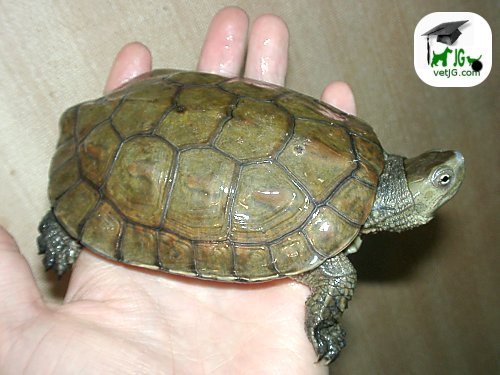
Excluyendo las tortugas marinas, en la Península Ibérica tenemos nuestras tortugas acuáticas autóctonas o galápagos,  ambas especies protegidas Mauremys leprosa ( foto ) y la Emys orbicularis. Dóciles animales cada vez menos presentes por la competencia que tienen entre otras las que se abandonan en charcas, lagos y ríos , como las de orejas rojas y otras Trachemys.

Keeping pet reptiles (Part I)

64% of all Spanish households own pets. Reptiles represent a total of 4% with demand increasing steadily.

About 64% of all Spanish households own pets. Reptiles represent a total of 4% with demand increasing steadily, especially for the more exotic and rare species (there are more than 8,100 species of reptiles). This makes customers more demanding in terms of ownership, maintenance and for veterinary expertise. Vets must be increasingly aware of all aspects of keeping and maintaining the different species.

This means we not only have to know about their condition and medicine but also their  management, biology, physiology, legal requirements and regulations (CITES) and everything to do with their world which is tremendously variable. 90% of disease in  reptiles are due to mismanagement at the place of origin or by the owner.

The variety of reptile pets assisted in our clinic is:
Turtle: 50% (40% land and 10% freshwater)
Lizards: 40% (30% Iguanas, Chameleons 3%, 7% other Lizards (Dragons, Geckos ….)
Snakes: 10% snakes (especially Pythons and Boas)
Crocodiles: 0.1%

In this article we will try and introduce the world of reptiles to you, albeit in a very concise and practical manner with emphasis on the most popular species.

HERPETOLOGY: the study of reptiles.
The Greek HERPETON: Reptile meaning: animal that creeps or crawls.
The fundamental characteristic of reptiles is that the animals have a body temperature
which is variable and dependent on external heat sources (wrongly called ‘cold-blooded’).
Before citing the most common species, it is important to briefly stress upon the most important points before purchasing and owning a reptile… which is how to have and design the best terrarium for them so to avoid as many pathologies as possible.

Faced with a huge choice, the decision factors besides the price should be knowledge about their requirements with regards to temperature and living space, what adult size  they reach and their temperament. Look out for: how the animal presents itself at the  time of acquisition: their colouring is very important if they are ill… the colour is off, the  eyes should be bright and clean, not watery, closed or sunk.

Ask if the animal has eaten before you buy, check the tail and legs to see if there are any obvious signs of mineral deficiencies. As with any pet you need to decide before  purchasing what you are looking for and what fits in with your live style. For example you  buy a very nice and small iguana one day which as a fully grown adult will be up to  two feet long and weigh eight kilos and has a life expectancy of some 30 plus years. There  are some turtles that bite, some that are very dirty and require water filters and a lengthier cleaning regime, as well as a whole host of different situations that one must be aware of in advance, as each species has unique needs and very different characteristics. Mismanagement of one or more of the following factors will determine if a reptile is best  suited or not.

TEMPERATURE: is the main factor to control because all of the animal’s vital functions  are dependant on it, such as immunity, wound healing, drug response, motor activity, neurological, reproductive, feeding, grasping capacity, digestion and enzyme activity (for example at 28° C it will take a snake five days to digest a rabbit and at 18º C 15 days. Reptiles have no temperature control so if kept too cold all functions such as digestion and nutrient absorption will slow down causing deficiencies or digestive fermentations and also predispose to immunosuppression, increasing susceptibility to infections and diseases of all types.

There should be hot and cold zones within the terrarium thus allowing the animal to choose and achieve its optimal body temperature (TCO). It is important to avoid  hypothermia and heat stroke as they are very sensitive to the slightest increase of the  critical points (max. temp/ min. temp), especially the tropical or non native. Each species  has its own TCO which we need to be aware of and know how to adjust, we must also  know which species hibernates or not. TCO (optimal body temperature) is normally  between 26-29º C and TOP (optimal preferred zone) between 22 to 32º C depending on  the species. Nightime temperatures are usually less, ranging between 20-24º C. All of the  guidelines  are dependant on the nutritional and health status of the animal, sick animals often require an increase over baseline. There are various heaters available such as stone heaters, special spot lamps, heated blankets etc. which always need to be at a  distance to the animal or covered to avoid burning. Additional thermostats are also useful  for extra safety. Bulbs (incandescent lamps between 25-60W for a volume of 30 litres)  are placed at the top mostly for heating the area of branches (for tree species), in general  the heaters should only cover half or a max. of threequarters of the total area, allowing  space for cold spots. It is not advisable that the temperature is uniform and it’s best to  control each area with a separate thermometer. Blankets are good for quarantine, but not  for aquaterrariums. Keeping your home at a constant temperature of 22-25ºC is also helpful.

LIGHT: influences appetite, synthesis of vitamin D3 and calcium absorption, particularly in lizards and UVA rays (320-400nm) influence the behavior and psyche. Minimum photoperiod from nine hours daily, except for nocturnal species. In summertime 12-14 hours in light and 10-12 in darkness is advisable whereas in winter the light hours should  shorten to eigh-nine hours.

Recommended lights are neon or fluorescent lamps or better still direct sunlight, however the conventional fluorescent bulb is not sufficient and UVB lamps, the most similar to the  sun are expensive and must be renewed every 9-12 months to ensure their effectiveness.

This article was published in Costa Blanca News.

Caring for the senior dog

Even though your dog may be slowing down a little, there’s no reason why the later years in life shouldn’t be some of the most rewarding. After all, he’s wiser as well as older. With regular veterinary attention,  daily care and proper nutrition, your senior dog can still experience a very happy, healthy life. Dogs are often older than  we think they are, especially when we’ve had them as puppies as time flies by and we have always been used to their energetic behaviour.

There is a wide breed variation in what constitutes older age as generally speaking, small dogs live the longest, while large and giant breeds have relatively short lifespans (a Great Dane is considered ‘old’ at six). In addition  to a dog’s breed, specific lifestyle factors affect how long a particular dog will live, such as diet, exercise and medical history. As the owner of an older dog it is important to recognise tell-tale signs of illness so you can seek prompt veterinary attention. Many diseases  have slow, progressive signs that are easy to put down to ‘old age’ but in fact may be very treatable. Certain changes will occur in your dog’s body as he gets older. Important bodily functions, normally taken for granted, may start to slow down or malfunction. Just like humans, the senses eventually start to deteriorate, leading to impaired vision, hearing, taste and smell. Older dogs are also prone to a number of medical conditions, the signs of which can be subtle and that we, as owners, should be on the lookout for as many are treatable.

In the same way human medicine has lengthened life expectancy, this is also ensured in veterinary medicine. Today’s available diagnostics and treatments have enabled us to prolong the life of your pet as much as possible whilst maintaining their quality of life. Diseases that are frequently diagnosed in this age group of dogs include:
■ Osteoarthritis is common in older dogs causing reduced energy levels, lameness, stiffness or difficulty getting up, or lameness/stiffness after a walk and reluctance to exercise.
■ Dental diseases – tooth and gum conditions are common in older dogs; look out for food being dropped, excessive salivation, pawing at the mouth, smelly breath or difficulty chewing food. Swellings below the eye may be signs of tooth root abscesses and need veterinary attention. .
■ Kidney problems can cause excessive thirst and frequent  or uncontrolled urination. Drinking and urinating more can also indicate other problems such as diabetes and various other hormonal conditions.
■ Heart and respiratory conditions can cause reluctance to exercise, coughing, trouble breathing and lethargy.
■ Cancers, the type of  which will dictate the signs but any unexplained weight loss, or growths, warts or skin lumps should be investigated.
■ Cognitive behavioural dysfunction, a syndrome which can cause signs consistent with senility including disorientation, pacing and inappropriate vocalisation.
■ Cataracts can be a problem in older dogs, but a hazy, bluish appearance to the eyes can be normal (a condition called nuclear sclerosis). Your vet will be able to distinguish between the two. If you notice any of the above signs, or any other signs  of illness such as vomiting, diarrhoea, loss of appetite, weight loss or weight gain or reluctance to exercise contact your vet.

The recommendations we can offer owners of older dogs are described in our following senior plan:

1 – Nutrition: feed older pets with foods low in salt and fat (light complete foods) that are especially formulated for them. Supplement their diet with a Chondroitin Sulfate compound to reduce the symptoms of osteoarthritis as much as possible.

2 – Periodic check-ups: a clinical review conducted annually is recommended. This consists of blood tests, two Xrays, Ultrasound and an Electrocardiogram for a detailed study of how the Circulatory, Digestive, Respiratory, Endocrine, Renal, Reproductive, and  Locomotion systems are functioning. These check-ups are cheap, fast and provide essential information that enables us to control our senior patient.

3 – Hygiene: give special care and attention to the health of eyes, ears, anal glands etc with emphasis to the mouth, which should not have bad breath, gingivitis or periodontitis present. These oral infections, once present, can shorten the lifespan of your pet considerably due to their effect on the heart.

4 – Medications: we recommend the use of products such as Karsivan for all our senior patients, these enable more oxygen to reach the vital organs such as the brain, liver and kidneys. In addition to Heart failure, Periodontitis, Arthritis, Nephrotic Syndrome and many others diseases it is now more common to find tumours or cancer in our senior patients.

Over the years, the chances of our dogs having a tumour have increased. The types of tumours
vary from the less harmful such as warts to the most damaging Lymphomas. In bitches, mammary tumours refer directly to their reproductive life and can affect 50% of all bitches over the age of 7.
The veterinary expert knows how to look for any evidence of tumours in senior patients and in addition we have now at our disposal series of diagnostic tools that will facilitate their early detection.

This article was published in Costa Blanca News.
The myths and facts about toxoplasmosis

Toxoplasmosis is caused by a microscopic parasite called Toxoplasma gondii. Cats and other feline species are the definitive hosts, ie. the parasite develops in the cat. However, the infection can develop in several animal species including man.

Toxoplasmosis is an illness that is arousing a growing amount of interest in society. Many  clients who come to our hospital are worried about the possible transmission of this disease.

Toxoplasmosis is defined as a zoonosis, this means it is a disease shared by animals and  humans and can be transmitted from animals to humans. With this article I will try to break some of the myths created about this disease and provide prevention measures  and hygiene tips to minimize the possibility of transmitting the disease to humans.

Toxoplasmosis is caused by a microscopic parasite called Toxoplasma gondii. Cats and   other feline species are the definitive hosts, ie. the parasite develops in the cat. However, the infection can develop in several animal species including man.

In humans, most infections are asymptomatic, causing no disease. Maybe one in 10  people will demonstrate mild flu-like symptoms. These can go totally unnoticed if no  specific clinical examinations are performed. People when infected, develop immunity,  therefore re-infection does not occur. Animals are infected by eating infected meat, by ingestion of faeces of a cat that has itself recently been infected or by transmission from  mother to fetus. Although cats are often blamed for spreading toxoplasmosis, contact with  raw meat is a more significant source of human infections in many countries and  fecal contamination of hands is a greater risk factor. According to some studies, around  half the world’s population has been infected with toxoplasma at some point in their lives.

Cats excrete the pathogen in their faeces for a number of weeks after contracting the  disease, generally by eating an infected rodent. Even then, cat faeces are not generally  contagious for the first day or two after excretion, after which the cyst ‘ripens’ and  becomes potentially pathogenic.

Studies have shown that only about 2% of cats are shedding oocysts at any one time and  that oocyst shedding does not recur even after repeated exposure to the parasite. The  greatest risks are to people with a weakened immune system, such as AIDS patients or  pregnant women.

In pregnant women the parasite can cross the placenta and infect the fetus, causing abortions or congenital malformations that may develop even several years after birth. If the woman is infected before six months of pregnancy there are no risks to the mother or the fetus due to the development of antibodies. A simple blood test can determine whether the mother has been exposed to the parasite and whether the infection has  occurred recently. In the latter case, your doctor will provide a drug that will greatly reduce the risk of infection to the fetus. If you are pregnant or plan to become pregnant, check with your doctor. In AIDS patients or people receiving treatment with certain drugs such as steroids or chemotherapy the infection can progress to a severe form of the  disease.

Recommendations and appropriate measures to prevent toxoplasma infection: These recommendations are valid for the general population, for pregnant women or immune  compromised patients in particular. Wear gloves when handling raw meats. Wash hands  and instruments with soap and water after handling meat products. The freezing process  of 3-5 days or cooking meats and vegetables over the 66 ° C completely destroyed the  parasites.

  • Wash fresh produce before consumption.
  • Boil water if canalisation system is non existent.
  • Use gloves when gardening or working with soil. In the soil the parasites can remain infectious for many months.
  • Do not feed cats raw meat.
  • It is advisable to rinse out the cat litter box, especially if they are roaming free. If you are pregnant or immune compromised, delegate the job to another person.

In conclusion, it is important to note that from the epidemic or statistical point of view the vast majority of human infections are not associated to cats. Therefore living with your pets does not significantly increase the risk of infection. Especially not when your pet is housekept and fed only on commercial feed or thoroughly cooked homemade food. Without doubt, the greatest risk of infection in developed countries is the handling of raw  meat, ingestion of poorly cooked meats and vegetables and the lack of appropriate  hygiene measures when handling soil or doing yard work.

This article was published in Costa Blanca News.

How often should we deworm our pets?

Up to 30% of our animals are carriers of various parasites, including several types of worms round (nematodes) and flatworms (tapeworms), most of them transmitable to humans

According to various studies and depending on the area you live in (city or rural area), up  to 30% of our animals are carriers of various parasites, including several types of worms  round (nematodes) and flatworms (tapeworms), most of them transmitable to humans.

Deworming should be performed both in puppies and adult animals as well as pregnant bitches/cats (as they can often transmit these parasites to their offspring).

It is therefore important to check our animals and set up a regular routine of at least four times a year. Just a simple protocol and some hy-gienic measures to prevent transmission: Apart from collecting pet droppings and disposing of them appropriately it is essential to prevent the reproduction of these parasites by avoiding the feeding of raw meat. Try and restrict contact with wild animals (rodents and insects such as flies, cockroaches, etc.) and access to fields or gardens where children play.

Recent European guidelines use a philosophy more geared towards individual risks for each animal. These guidelines recommend that if regular deworming is used, animals should be treated at least four times a year, with no more than three months between
each treatment. This is based on some research indicating that dropping treatment to three-four times per year had no effect on parasite levels. This approach is more  conservative (in terms of the number of treatments) and probably has less of an impact on the development of resistance, but it requires more organisation and thought. If used properly, it’s probably a good approach.

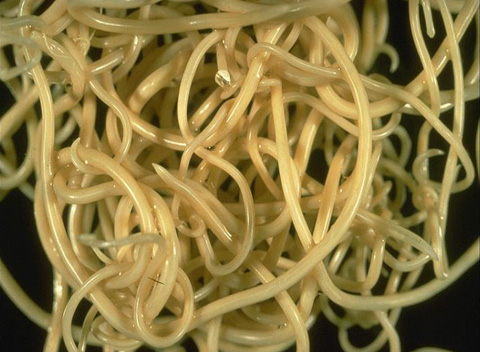
Heartworm Photo from JG vets

There really can’t be a ‘one program fits all’ approach that properly addresses the risks for all pets (and people) in all regions. Tailoring the deworming strategy to your pet, based on your pet’s and your family’s risk, is the logical approach.

Regardless of the chosen approach, regular fecal testing is a good (and underused) way to assess what’s going on with parasites in your pet, and to identify treatment failure or the emergence of drug resistance.

Monthly heartworm prevention has an impact on what you do as well, since typical  heartworm preventives are also effective against roundworms and hookworms, the main  parasites targeted by routine deworming. If you are in a region where heartworm is  present, monthly treatment during the heartworm season is indicated, and the main  decision that needs to be made is what to do the rest of the year (where heartworm isn’t a  risk year-round).

This article was published in Costa Blanca News.
MRI: a powerful diagnostic weapon for our pets

MRI is a modern diagnostic tool which was first used in human medicine in the 80s.

What is an MRI scanner?

It is a modern diagnostic tool which was first used in human medicine in the 80s. It obtains anatomical images of any part of the animal in any plain (Sagittal, Coronal and Transverse), thus detecting any size lesions present.

How does an MRI scanner work?

It works on the simple principle of hydrogen atoms in the tissues, as most tissues contain water. Water is composed of hydrogen and oxygen therefore all tissues will give an MRI signal, the signal will be determined by the water content of the tissue.

How dangerous is the resonance? MRI is totally harmless for the patient, the operator and the environment and unlike x-ray and CT does not emit ionising radiation, but radio waves.

The only contraindication for MRI studies is the presence of metal objects in the animal’s body, which may discourage the study or limit the area that can be studied.

Can you do an MRI in all animals?

All species of animals can be studied by resonance, regardless of weight or age, although our hospital serves pets only, ie dogs, cats, birds, reptiles and small mammals. Because it is a completely non-invasive technique it has numerous advantages over other diagnostic techniques.

The resonance is capable of differentiating blood vessels and nerves within an anatomic region and so makes it essential to detect numerous disorders.

When is an MRI necessary?

An MRI is recommended in the study of any organ or diseased tissue, being especially useful in the study of soft tissue since they are the most difficult to diagnose, as they do not appear on x-rays or CAT scans.

Typical systems studied by resonance are the nervous system (brain, spinal cord and nerves) and the musculoskeletal system (muscles, tendons and joints like the knee, hip, shoulder, elbow etc.).

It can also prove extremely useful in diagnosing many diseases of other systems for example:

Ligaments in dogs stifle joint

Vision: retinal detachment, tumours
Hearing: chronic otitis, internal otitis
Renal: tumours, polycystic disease, renal vascular abnormalities, bladder
Reproductive: ovarian disease, prostate
Digestive: liver, pancreas, intestine, stomach
Respiratory: lungs, trachea, pleura
Cardiovascular: lymphatics, heart

And many more.

With one study depending on the size of the animal we can produce images of all structures present in the area being tested. Giving us a whole body image with small patients or images of full head, chest, abdominal or pelvic region etc.

MRI scans provide cross-sectional imaging in any plain with no superimposition of overlying structures. The soft tissue detail and resolution is extremely good allowing observation of lesions (which are easily distinguishable from healthy tissue), and their relationship to adjacent structures (lymph, lymph vessels, arteries, veins, nerves, etc…), assisting the veterinarian in making decisions such as: assessing the infiltration of the injury, the extent of an inflammation or the degree of malignancy, age of an injury and etc.

How much does an MRI cost?
The price is variable, as it depends on the area of the study, duration of the study, the severity of injuries, the size of the animal and so on.

Do you have to anesthetise the patient?
Pets need to be sedated during the scan. With the vet MRI scanner it is easy to monitor the animal during the scan as they are easily accessible, therefore reducing any risks for the patient.

How long does the test take?
It depends on the areas studied, the protocols and sequences used … usually taking an average of 30 minutes per patient.

When do I get the results?
While the vet gets the results immediately, you need a detailed study of medical images
obtained by our specialist, so we normally advise you of the results the next day.

When is it necessary to use contrast in an MRI and is it dangerous?
The contrasts are often necessary in order to highlight the pathological tissues in MRI.
According to our experience and to modern publications, the possibility of allergic reactions to the contrast is remote.

MRI of a dogs spine

How to interpret an MRI?
The interpretation of resonance images is a rather difficult task for the veterinary surgeon, due to its great complexity, requiring specialised training at universities and international conferences.

How is this MRI different to others on the market?
An MRI diagnostic image should be of high quality and capable of dealing with modern
DICOM software. This does not come with most devices on the market, as they have been manufactured for diagnosis in human medicine and are usually second hand ie where obsolete many years ago.

This article was published in Costa Blanca News.

Nuevas mascotas en la clínica veterinaria (2ª parte)

El cerdo vietnamita lleva años siendo mascota de muchas estrellas ygente del espectáculo para llegar, hoy día, al común de los mortales.

El cerdo enano vietnamita es una raza de cerdo doméstico y es uno de los nuevos animales incorporados, al ámbito familiar, como mascota. Pueden vivir hasta 20 años, siendo la media de unos 10-12. Llegan a medir de 45 a 50 cm y pesar entre 30 y 35 kg dependiendo mucho de la alimentación y el ejercicio que realice. Suelen tener más pelo que sus primos mayores y aunque generalmente son oscuros cada vez más se imponen ejemplares bicolores o incluso casi blancos.

Como son omnívoros pueden alimentarse de cualquier fracción de alimento, si bien deberemos acostumbrarles a una dieta a base de cereales (avena, cebada, maíz) con frutas y verduras. Pueden comer algo de pienso para perros como parte de un premio. El pienso que venden para cebo de cerdos no es el indicado para ellos pues con ese pienso engordarán demasiado y eso mermará su salud.

Son animales muy inteligentes y con un poco de paciencia, cariño y atención, podemos hacer de él un amigo fiel como un perro. Si a esto le añadimos una buena educación, estos animales se dejarán acariciar, comerán de nuestra mano y podremos pasearlos con una correa.

Como sus primos mayores tienen un gran sentido del olfato por lo que no habrá resto de comida que escape a su investigación. Habrá que ser cuidado con dejarnos comida olvidada pues pueden ocasionar pequeños destrozos en su afán por conseguirla.

En contra de lo que muchos pueden pensar no son sucios y no comerán ni dormirán junto donde hacen sus necesidades, que por cierto se adaptan a hacerlo en un cajón con arena como si fuese un lindo gatito. Al no tener glándulas odoríferas no sudan y al ser muy limpios podemos bañarlos una vez cada 1-2 meses, si bien en verano agradecen duchas de agua cuando el calor arrecia pues son más sensibles a climas cálidos.

Hábitat
: necesitan igualmente de un terreno pequeño para poder andar y correr o bien de paseos diarios para evitar engordar en exceso.

Son animales muy prolíficos por lo que antes de ponernos a criar con ellos debemos de haberles buscado un buen hogar a todos los lechones que tendremos para repartir.

Como animales presa que son no debemos colocarlos boca arriba dejando su vientre al descubierto pues les causa mucho estrés pudiendo, en algunos casos, reaccionar de forma inesperada.

El Corazón

  Podéis ver el trabajo sobre El Corazón, que presenté en mi clase en marzo de 2011, haciendo click aquí.

Si queréis ver el video, pronto lo subiré al you tube y pondré el enlace aquí.

Estoy de visitante en el hospital veterinario JG de Mutxamel desde hace dos años, y me lo paso muy bien.

Toxoplasmosis: Falsos mitos y realidad

La toxoplasmosis está producida por un parásito microscópico llamado Toxoplasma gondii.

La toxoplasmosis es una enfermedad que suscita un interés creciente en nuestra sociedad. Son muchos los clientes que acuden a nuestro hospital preocupados por la posible transmisión de la enfermedad. La toxoplasmosis se define como una zoonosis, es decir, es una enfermedad que comparten los animales y la especie humana; por lo tanto, es susceptible de ser transmitida de los animales al hombre. Con éste artículo pretendo romper con algunos falsos mitos creados en torno a esta enfermedad y aportar algunas medidas de prevención e higiene adecuadas para evitar la transmisión de la enfermedad al hombre.

La toxoplasmosis está producida por un parásito microscópico llamado Toxoplasma gondii. Los gatos y otras especies felinas son los hospedadores definitivos, es decir, el parásito desarrolla su ciclo completo (fase sexual) en el gato. Sin embargo, la infección puede desarrollarse en numerosas especies animales, incluido el hombre. En el hombre, la mayoría de los casos de infección son asintomáticos, no produciendo enfermedad, aunque en una de cada 10 personas se manifiestan signos leves y de corta duración que pueden ser similares a una gripe, razón por la cual puede pasar desapercibida si no se realizan unos exámenes clínicos específicos. Las personas, cuando han sido infectadas desarrollan inmunidad, por lo que una nueva infección no ocasiona enfermedad ninguna.

El gato y otras especies felinas son los únicos animales que eliminan con las heces las formas infectantes del parásito. El gato infectado eliminará el parásito durante 3 semanas o un mes aproximadamente, aunque el parásito no es infectante hasta que han transcurrido unas 24-48 horas tras su eliminación con las heces. Bajo condiciones ambientales adecuadas, al parásito se conserva viable durante muchos meses e incluso años, contaminando la tierra, el agua y los vegetales. Otros animales, como cerdos, rumiantes y aves se infectan al ingerir verduras, frutas o semillas contaminadas. Una vez ingeridos, los parásitos se depositan en el músculo en forma de quistes microscópicos. El hombre adquiere la infección al ingerir carne, agua o verduras infectadas. Según algunos estudios se considera que cerca de la mitad de la población mundial ha sido infectado con el Toxoplasma en algún momento de su vida.

El mayor riesgo de padecer problemas está en las mujeres embarazadas, ya que el parásito puede atravesar la placenta e infectar el feto, causando abortos o malformaciones congénitas que incluso pueden desarrollarse varios años tras el nacimiento. Si la mujer se ha infectado antes de los 6 meses de quedar embarazada, no hay riesgo de enfermedad para la madre, ni de infección para el feto ya que se desarrollan anticuerpos que confieren inmunidad. Si la primoinfección se produce en la madre poco antes de quedar gestante o durante el embarazo, el riesgo para el feto es mucho mayor. Con un simple análisis de sangre es posible conocer si la madre ya ha estado expuesta al parásito y si la infección se ha producido recientemente. En éste último caso, su médico le facilitará un medicamento que permitirá reducir en gran medida el riesgo de infección en el feto. Si está usted embarazada, o planea estarlo, consúltelo con su médico.

Otro grupo de riesgo importante los constituyen las personas inmunodeprimidas (pacientes con SIDA, o en tratamiento con ciertos medicamentos como corticoides o quimioterápicos). En éstos casos, la infección puede evolucionar a una forma grave de la enfermedad.

RECOMENDACIONES Y MEDIDAS DE HIGIENE ADECUADAS PARA EVITAR LA INFECCION POR TOXOPLASMA

Estas recomendaciones son válidas para la población en general y para las mujeres embarazadas o pacientes inmunodeprimidos en particular.

  • Utilizar guantes cuando se manejen carnes crudas. Lavarse las manos y los instrumentos utilizados con agua y jabón tras la manipulación de productos cárnicos. El proceso de congelación durante 3-5 días o cocinar las carnes y verduras por encima de los 66º C destruyen completamente los parásitos.
  • Lavar las verduras frescas antes de su consumo.
  • Hervir el agua si no procede de estructuras canalizadas.
  • Emplear guantes cuando realice trabajos de jardinería o trabaje con tierra. En la tierra, los parásitos pueden permanecer infectantes durante muchos meses.
  • No alimentar a los gatos con carnes crudas, ni permitir que cacen.
  • Es aconsejable limpiar diariamente el arenero de los gatos, sobretodo si éstos son de vida semilibre. Si está usted embarazada o es inmunodeprimido, permita que ésta labor la realice otra persona.
Para concluir, es importante señalar que desde un punto de vista epidemiológico o estadístico, la gran mayoría de las infecciones en el hombre no están asociadas de forma directa a los gatos, por lo que convivir con éstas mascotas no constituye un aumento significativo del riesgo de infección, sobretodo cuando no tienen relación con el exterior de la vivienda, y son alimentados exclusivamente con piensos comerciales o comida casera bien cocinada. Sin duda, el mayor riesgo de infección en países desarrollados es la manipulación de carnes crudas, la ingestión de carnes y verduras escasamente cocinadas y la falta de medidas higiénicas adecuadas al manipular tierra o realizar trabajos de jardinería.

Reptiles como mascotas: I. Tortugas acuáticas

Referente a las tortugas acuáticas con más tradición o comercialización en España tenemos la Trachemys scripta elegans o tortuga de orejas rojas (arriba), las Trionys o de caparazón blando y las actuales Graptemys ( o de borde aserrado )(abajo). Todas ellas con un origen tropical y por tanto no adaptadas nuestras a temperaturas invernales, necesitando pues sistemas de calefacción adecuados, así como filtración del agua de sus terrarios para prevenir sobre todo problemas respiratorios y del caparazón. Todas ellas son carnívoras u omnívoras. Hoy hay mucha controversia en cuanto a su tenencia pues cuando crecen para muchos de sus propietarios supone un problema y se las abandona en nuestros lagos y ríos compitiendo y acabando con nuestras propias y autóctonas tortugas o galápagos.

Does your ferret have everything it needs?

Documentation
A health card where vaccinations, info about worming, weight and temperature as well as notes on operations performed on the ferret (ie. sterilization, microchip implant …. etc) are recorded at each visit to the vet. This information can be of great help in the event that during a journey or move the ferret suffers an illness. Additionally it will give the regular vet more control over the health of your ferret.

Food. Ferrets have unique feeding requirements, which are now finally being addressed by commercial pet food manufacturers, though with varying success. Ferrets are obligate carnivores, and food passes through the digestive system of a ferret very quickly. They also lack the ability to derive nutrition from plant matter. For this reason, a ferret diet must be high in animal protein, high  in fat, and low in fibre. All foods, including foods intended solely for ferrets, are not created equally, so be careful what you are feeding your ferret. Have food available  at all times. Ferrets have a quick metabolism along with a short digestive system, so need to eat frequently (usually every 3-4 hours). It is best to have food available constantly. Most ferrets will eat only enough to meet their needs, and will not  become obese if allowed constant access to good quality food.

Basic requirements for a ferret diet:
■ High in protein – 30-40 percent on the label nutrition analysis
■ Protein must be high quality, highly digestible, and be animal-based (not plantbased)
■ High in fat (at least 20 percent, perhaps up to 30 percent on the label analysis)
■ Very low in carbohydrates and fibre (less than 3 percent fibre).
This diet can be supplemented with many «goodies» like butter, cooked quails eggs,  raisins (not excessively) apple, pear, melon or chicken porridge for babies however always in low quantities. Never give foods rich in sugar, salt or  spices. Raw meat it is very desirable but can be a source of parasites. Beware of vitamin  supplements as they are very sensitive to excess vitamin A. The main component of the diet must be dry food. Wet food often has inadequate protein levels and doesn’t prevent tartar build up on the teeth.

Drinking water
Water should be changed daily and provided freely. It is recommended to accustom them to drink from a nipple drinker  as they like to play with water and throw around any bowl that we place in their habitat.  If you use a bowl, make sure it is heavy. The administration of any medication in the drinking water must be under the strict supervision of a veterinarian.

Habitat
Ferrets should not spend most of their time locked in a confined  space. However, maintaining a ferret loose in the house requires constant  monitoring. The ideal bedroom for a ferret has to be 100 cm long by 60 cm wide and 60 high.  Best is a wire mesh cage on a
metal frame in which place a  box with good material for the nest such as an old shirt or towel. Most ferrets are very well
adapted to a kind of hammock hanging halfway up the cage, allowing them to climb up and down continuously, which also
gets them to exercise. Provide the same type of litter tray used for cats. However we must be patient as with ferrets it is perfectly normal to go in any corner and not the box supplied for this purpose.  We must change the litter every few days to prevent the strong odour.

Hygiene
It is not recommended to wash them too often, because it stimulates the secretion of the sebaceous glands (which produce musk to care for hair) and therefore odour. Ferrets should not need bathing more than once a month or less frequent if they have skin problems due to excessive dryness. There are specific shampoos available or you can use shampoo for cats. Nails need to be trimmed regularly.
The ears must be checked and cleaned usually no more than once every month or month and a half. To clean the ears you can use products for cats or cotton with baby oil.

Playfulness
According to owners they are loving, intelligent and inquisitive  animals. Once they have established trust with their owners they are playful and very affectionate. Ferrets do not become less playful with age like other species; they will always  be looking for someone to play with.

Simulated fights and chases are the most common form of entertainment … conducting a so-called «war dance»… arch, walk back and open their mouths, thereby encouraging the game. They are extremely  curious and hyperactive. But it also has its drawbacks; they tend to chew soft or elastic objects. They like to hide things, sometimes bite, and considering their size can cause significant injuries. They are nervous animals, so mixing children and ferrets usually results in a child bitten and a deranged ferret.They can get along with dogs and cats, although we must always be present to avoid  any surprises. You can keep a couple of ferrets together without any problems especially if they have grown up together.

Worming
We recommend worming every  three months to prevent possible infestation with parasites, especially if they live with other pets or have  access to a garden. Please contact your vet if you have any questions.

Flea Baths
If your ferret has fleas, consult your veterinarian before using a flea shampoo. Your vet will  recommend the best program of treatment for fleas for your household, including a ferret safe flea shampoo.

Most frequent diseases
The list below is a short summary of the most common diseases that can affect ferrets. You  can vaccinate against some of them others can be treated successfully. The most important  thing is to act quickly and consult an experienced veterinarian. Anaemia induced by oestrogens: in females spayed and not covered. Canine distemper: fatal viral disease of results in most cases.
Influenza: similar to human  influenza is spread ferret to human and vice versa. Rabies: deadly virus, preventative vaccine is essential.
Heartworm: affects the function of the heart.  Obstruction by foreign bodies: very common in ferrets because of its exploratory character and its liking for taking all objects in to the mouth. Skin neoplasms: frequent presentation in advanced age, any changes in size and texture of the skin should be consulted with your veterinarian.
Posterior paralysis syndrome: multi factorial disease that requires a more in-depth study of the ferret. Lymphoma: along with Insulinoma are the most common tumours in ferrets.

Vaccinations
Rabies and distemper are the most important diseases in ferrets. Ask your vet about immunisation schedules in ferrets.

Regular check-ups
A complete check up by your vet should be performed at least once a year including weight control, a complete blood test,  radiography is of great help for the early diagnosis of many illnesses that can be present without external symptoms. These tests are performed with minimal stress under anaesthesia with isoflurane gas.

Recommended surgery
For any female ferret not used for breeding sterilization is recommended. The removal of anal glands in both sexes is also well advised
to mitigate as much as possible the smell of our ferrets.

How to tell if they are ill?
Loss of appetite, loss of desire to play, loss of mobility in the back legs and any symptoms  that do not fit in with their usual behaviour should make us suspect that the ferret may be suffering from a disease and a consultation with the veterinarian is required

This article was published in Costa Blanca News.

Reproducción de Erizos.

Determinar si un erizo es macho o hembra puede ser toda una aventura. Un cristal puede sernos de gran ayuda.

La manera sencilla de determinar si el erizo que tenemos delante es macho o hembra es dejándolo sobre una mesa de cristal y mirando desde abajo. Mientras camina nuestro pequeño amigo podremos distinguir la presencia o ausencia del pene en mitad del abdomen.

Diferenciación sexual: Los machos son mayores que las hembras, y tienen el vientre de un color que varía entre el pardo oscuro y el pardo amarillento, mientras que el de las hembras es color ceniza. El prepucio del macho se encuentra cerca de la parte central del abdomen, en animales jóvenes está más cerca del ano como en hembras la vulva y migra con la edad. Los testículos permanecen dentro del abdomen durante toda la vida.

Generalmente tiene dos periodos de celo, uno entre mayo y junio, y el segundo entre agosto y septiembre. En esta fase del ciclo reproductivo, tiene lugar la parada nupcial, que se asemeja a una pelea entre machos, que siguen a la hembra con el hocico pegado a la cola. El cortejo tiene una duración que varía entre 30 y 180 minutos.
La gestación dura de 35 a 40 días y al finalizar ésta tiene lugar el parto (2 anuales), en el que pueden nacer de 2 a 10 crías. Las crías, que nacen con los ojos cerrados, desnudas y de un color rosáceo y con espinas ocultas por una piel edematosa., miden en ese momento de 6 a 9 cm y pesan de 11 a 25 gr. Mamarán durante unos 20 días. A los 3 días disponen ya de unas espinas duras de color blanco, y entre los 12 y 18 días abren los ojos, momento en que suelen pesar unos 70 gramos. Hacia las tres semanas empiezan tomando algo de alimentación sólida y dejan de mamar paulatinamente. A partir del mes de vida, ya acompañan a la madre en sus salidas.

En el caso de que tengamos crías pequeñas abandonadas podremos alimentarlas con leche de cabra (es más grasa) cada 4h si son muy pequeños. Tras la comida se aplicará un masaje en abdomen y genitales hasta que defeque y orine.

El destete: A partir de las 5 ó 6 semanas se independizan, y para cuando llegue el invierno deberán alcanzar los 400 gr de peso.

La madurez sexual (edad a partir de la cual pueden reproducirse) la alcanzan a los 10 meses aproximadamente.

¿Ve mi perro la televisión?

«Mi perro ve la tele conmigo», «el otro día sorprendí a mi perro viendo un documental de la 2», «mi perro ladra al ver un gato en la pantalla»…Seguramente habrán escuchado más de una vez algún comentario de este tipo, pero ¿Pueden los perros ver realmente la televisión tal como la entendemos nosotros?

Según las estadísitcas el 87 % de los dueños aseguran que su mascota ve la televisión.Teniendo en cuenta que el órgano más desarrollado en el perro es el olfato y que la televisión solo emite imágenes y sonidos hace que el perro pierda interés rapidamente.

La televisión aprovecha la persistencia retiniana, es decir sobre la pantalla se forma un punto de cada vez , estos se retienen en la retina y el conjunto de puntos da lugar a la imagen. Existe un frecuencia de parpadeo, también llamada flicker, que debe ser mínima para que se forme una imagen completa.

Las televisiones convencionales tienen una frecuencia de parpadeo de 60 Hz, adapatadas al flicker del ojo humano (50-60 Hz), eso nos permite ver una imagen completa en la pantalla. Sin embargo el perro al tener una frecuencia mayor de parpadeo (80 Hz), es decir «tienen ojos más rápidos» son incapaces de ver una imagen completa a dicha frecuencia.

La foto de la izquierda nos muestra lo que vería el ojo canino en una televisión convencional, una serie de punto en la pantalla que parpadean continuamente y no llegan a formar una imagen completa.


Si quieres que tu perro vea la televisión cómprate una tele de 100 o más Hz.

Reptiles como mascotas: II. Tortugas terrestres

Dentro de las especies de tortugas, éstas ya importadas, y como más importantes, a parte de la tortuga rusa (Testudo horsfieldi) o la Testudo marginata, tenemos la Geochelone sulcata ( abajo), una de las más grandes y de crecimiento rápido y que necesitan una alimentación mucho más controlada y completa. También la tenemos la Kinixys belliana o tortuga africana ( arriba) y la Geochelone pardalis ( centro). Importante en todas ellas dado su origen exótico deben de llevar un control sanitario veterinario más completo ya que pueden ser portadoras de enfermedades foráneas.
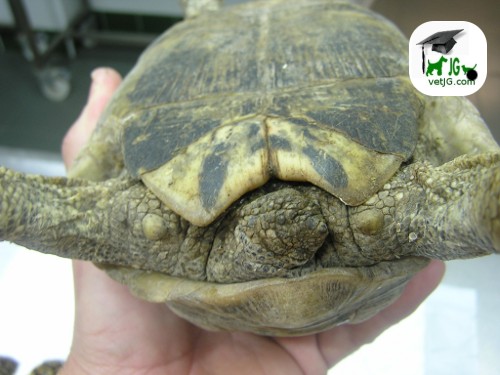
Glándulas del flanco en Hámster Sirio.

La glándula del flanco u odorífera en los Hámsteres sirios es una glándula sebácea que utilizan en el marcaje del territorio.

Es una glándula sebácea que los hámsteres usan para el marcaje. Es gracias a dicha acción de marcaje que estos pequeños roedores  pueden deambular después en penumbra por nuestra habitación siguiendo el olor que previamente han dejado como si fuera una carretera de olores. También estaría relacionada con el reconocimiento entre individuos y consecuencia de este hecho es que jugaría un papel de advertencia hacia otros individuos que entren en su territorio, sería como un cartel que anunciara la propiedad de una finca.

Presenta una morfología redondeada, levemente elevada y de coloración obscura, siendo así más evidente en animales de capa más clara. Se presenta de forma bilateral en ambos flancos. Realmente se aprecia más según se deteriora el estado fisiológico de la piel y es por ésto que no debemos confundirla con posibles tumoraciones del tipo melanoma o abscesos dérmicos. La glándula es sensible a  los andrógenos (hormonas sexuales masculinas) por lo que los machos la tienen más desarrollada que las hembras.

Tortugas en España (I): La tortuga mora y la tortuga mediterránea

Sin citar a nuestras tortugas marinas, dentro de las tortugas terrestres autóctonas españolas que además, están protegidas, tenemos la tortuga mora ( Testudo graeca)  y la tortuga mediterranea ( Testudo hermani ) siendo conveniente conocerlas e identificarlas. Ambas muy similares en su aspecto externo y color distinguiéndose entre otros caracteres por la presencia de espolones traseros en cara posterior del muslo en la tortuga mora (ausentes en la mediterranea).

Social Share Buttons and Icons powered by Ultimatelysocial
Follow by Email
Instagram